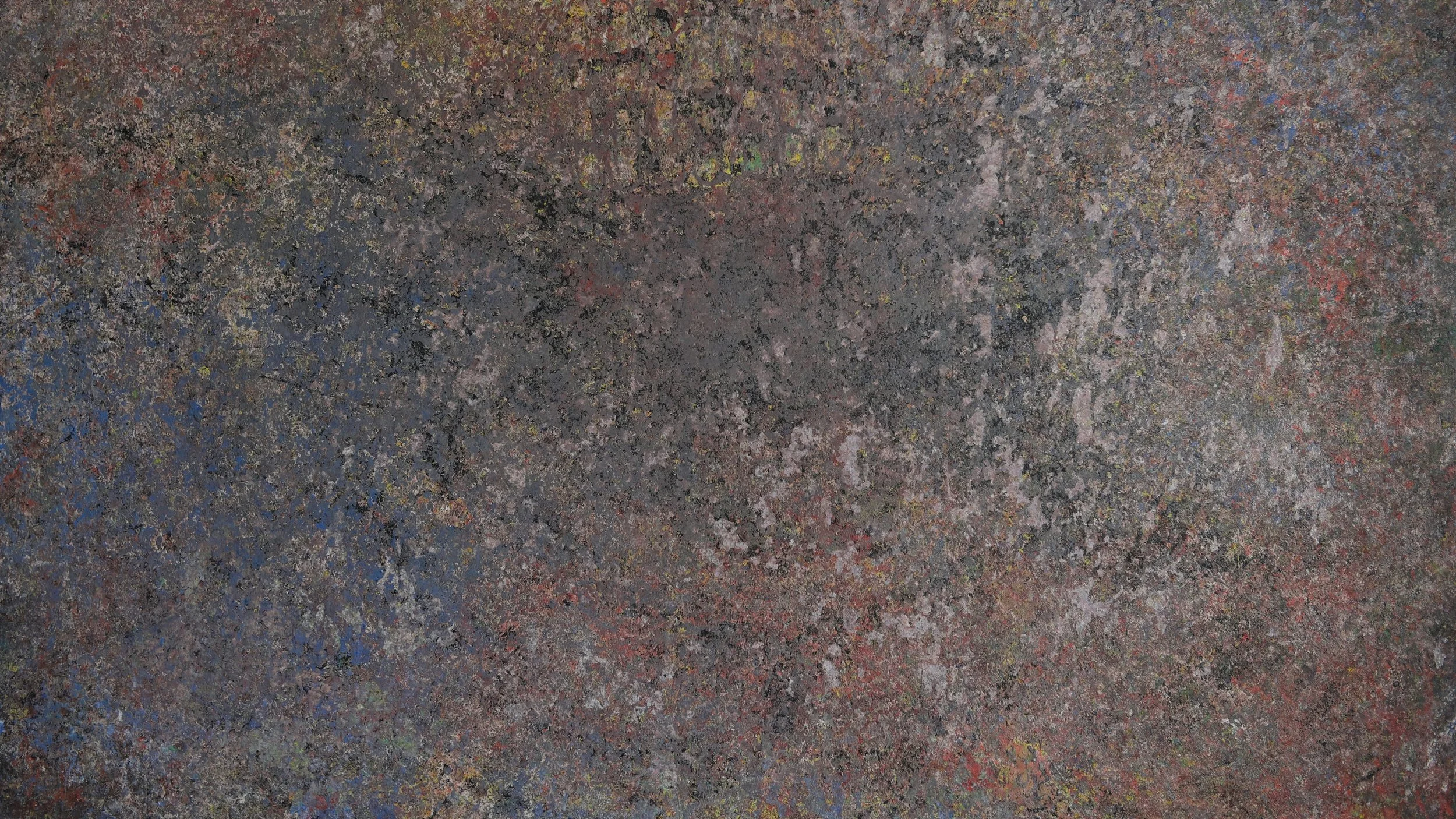
Roy makes densely layered abstract paintings on raw, unprimed canvas.
He came to painting after nearly two decades of manual labor in furniture manufacturing, steel forging, and leather craftsmanship, and that history is legible in the work itself: these are not composed pictures so much as worked objects, surfaces built up through repeated applications of acrylic paint and then abraded, peeled back, and partially undone.
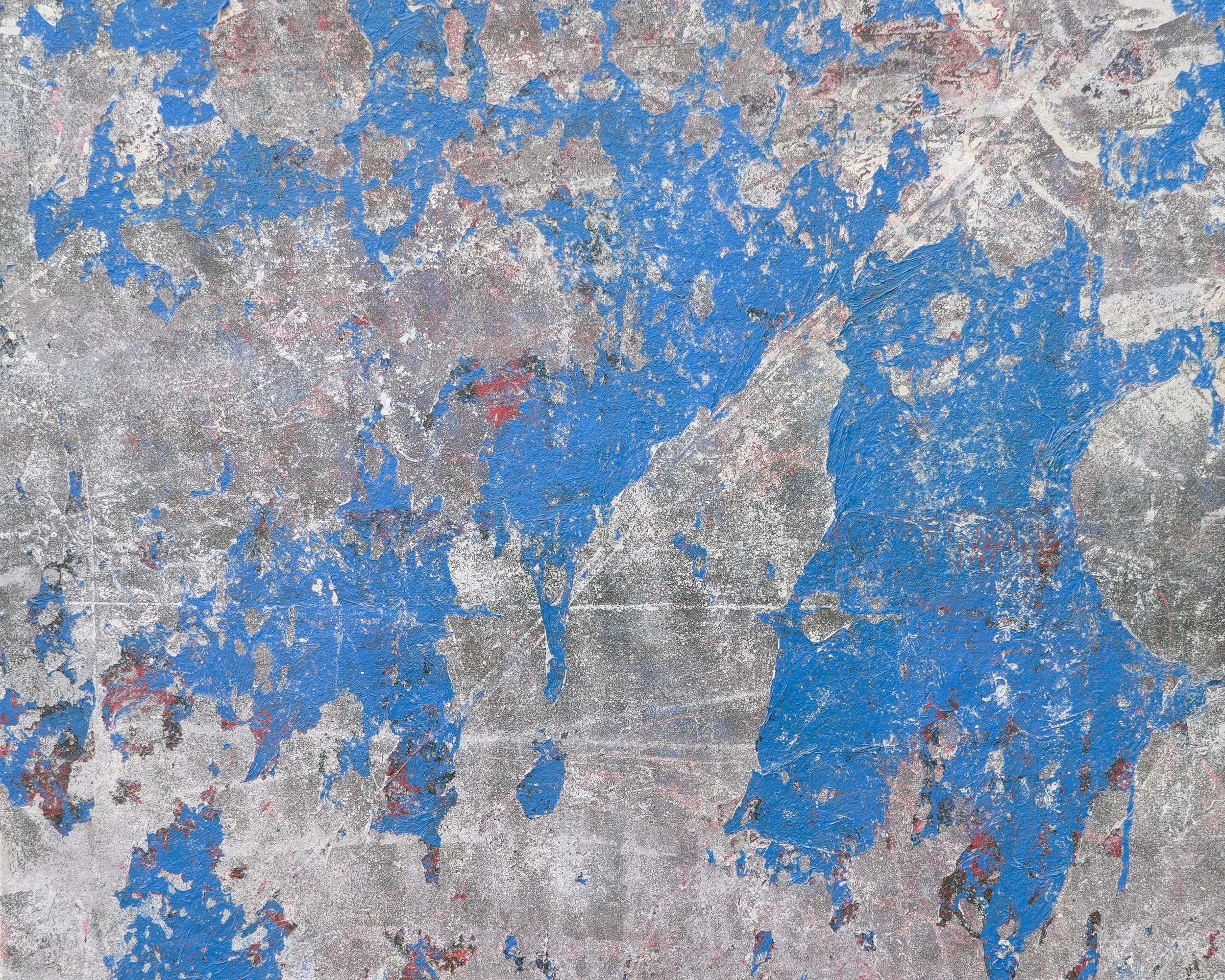
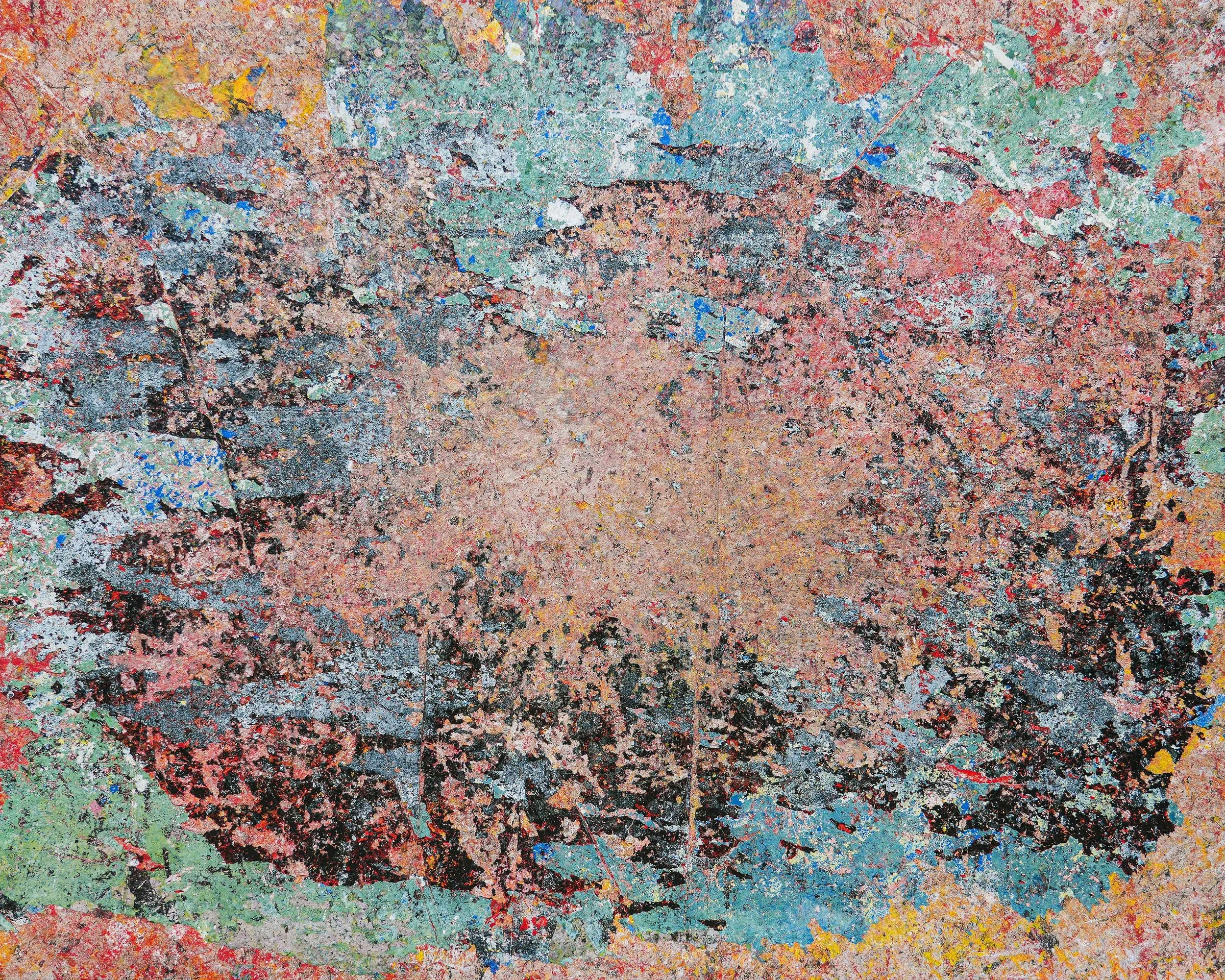
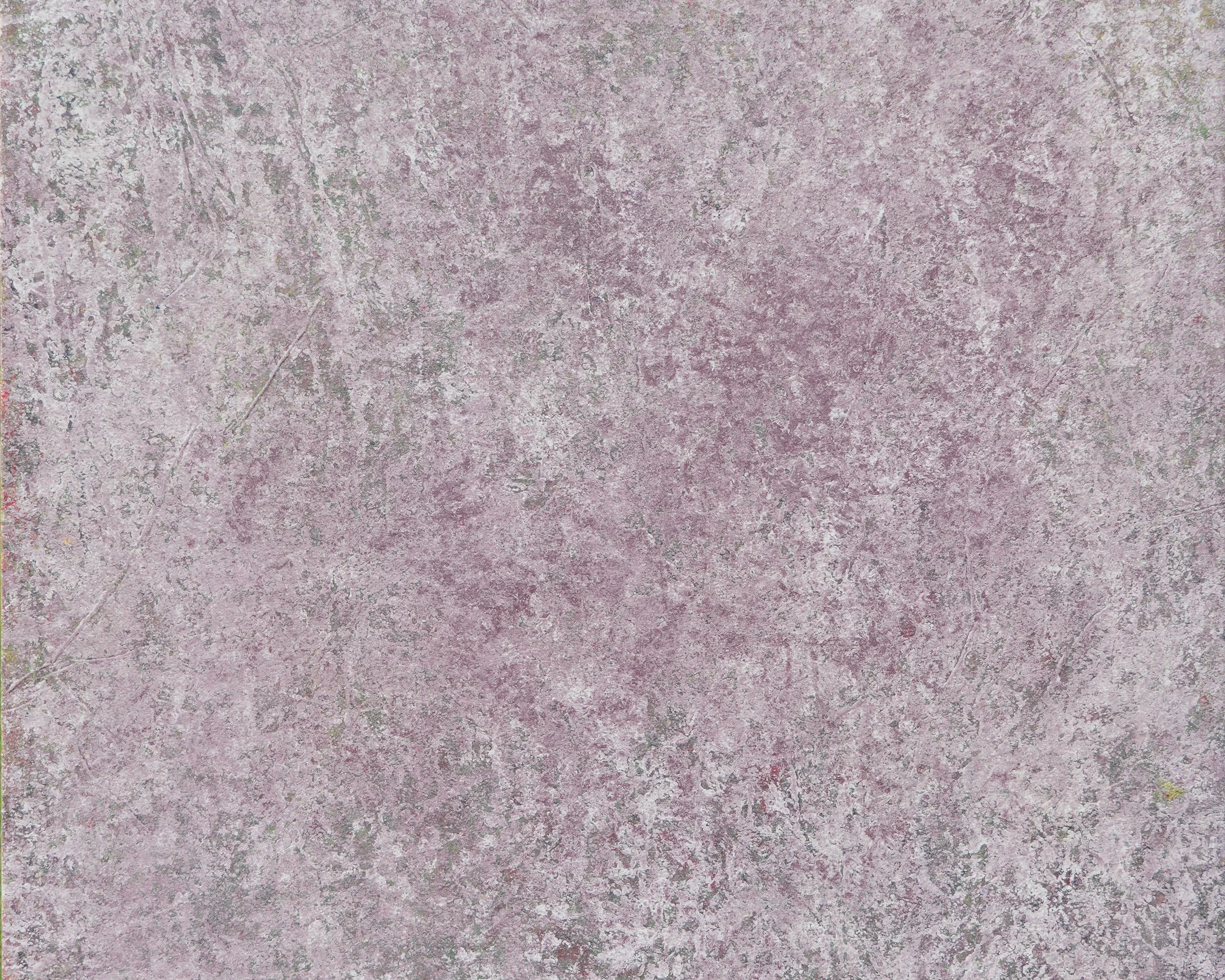
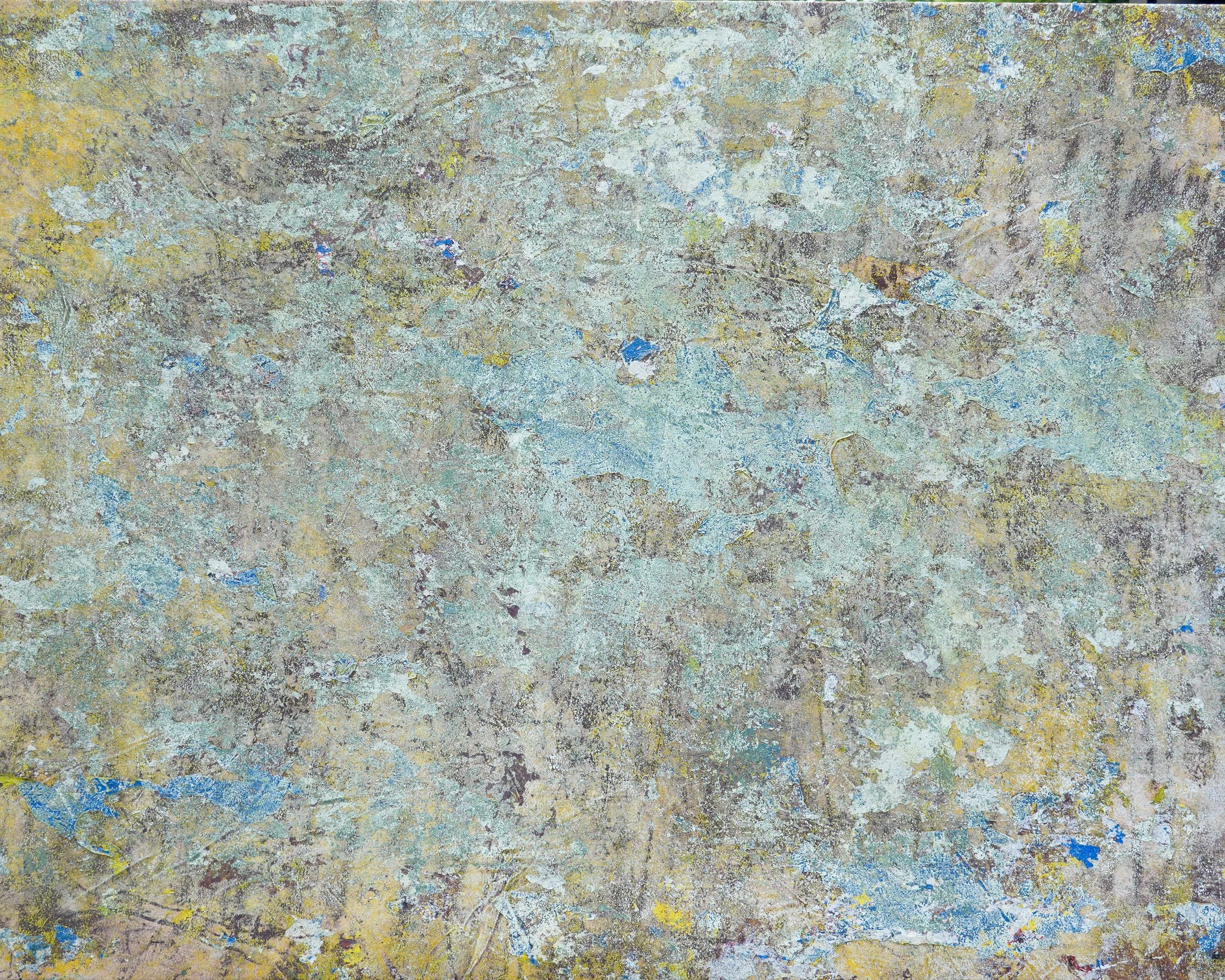
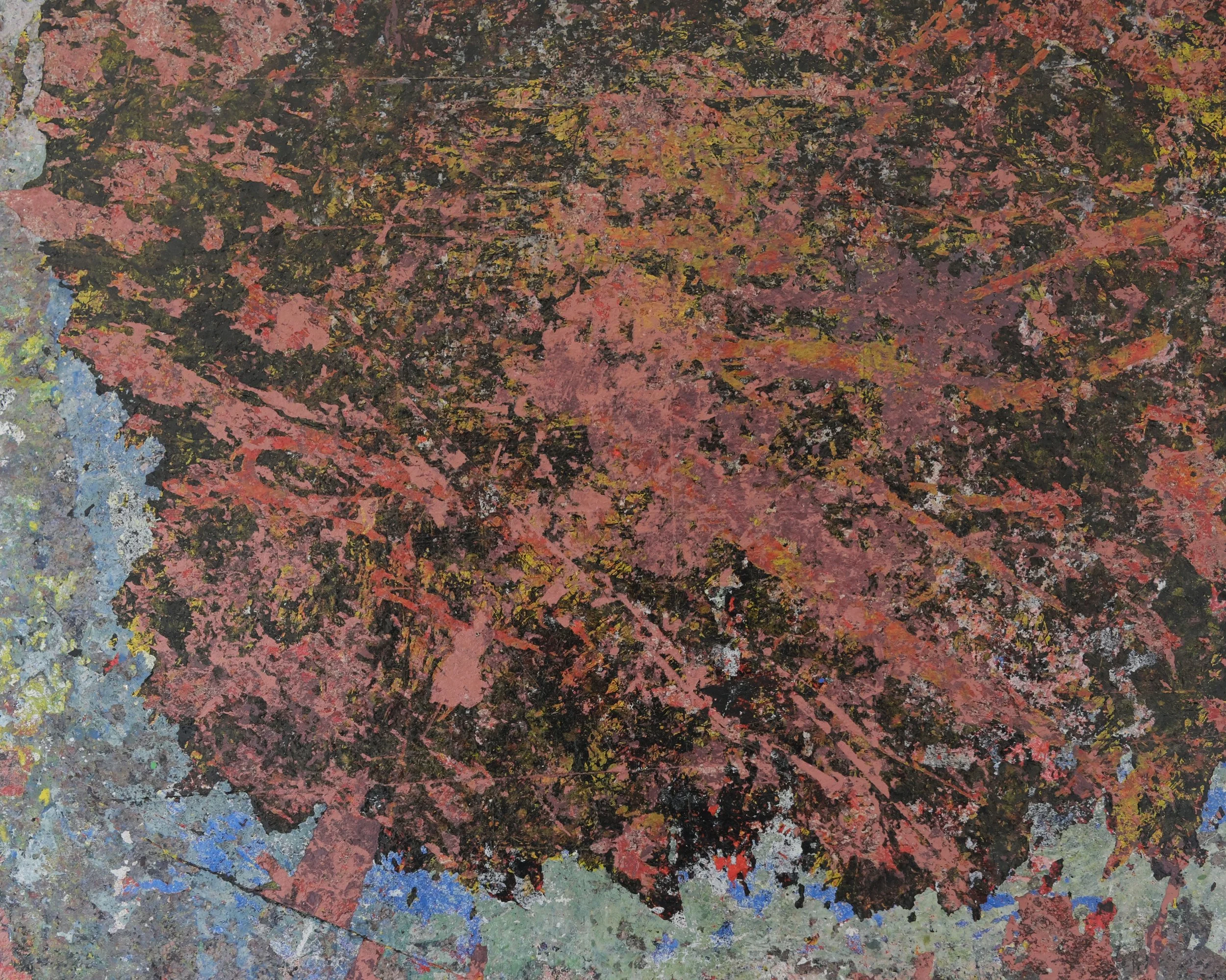
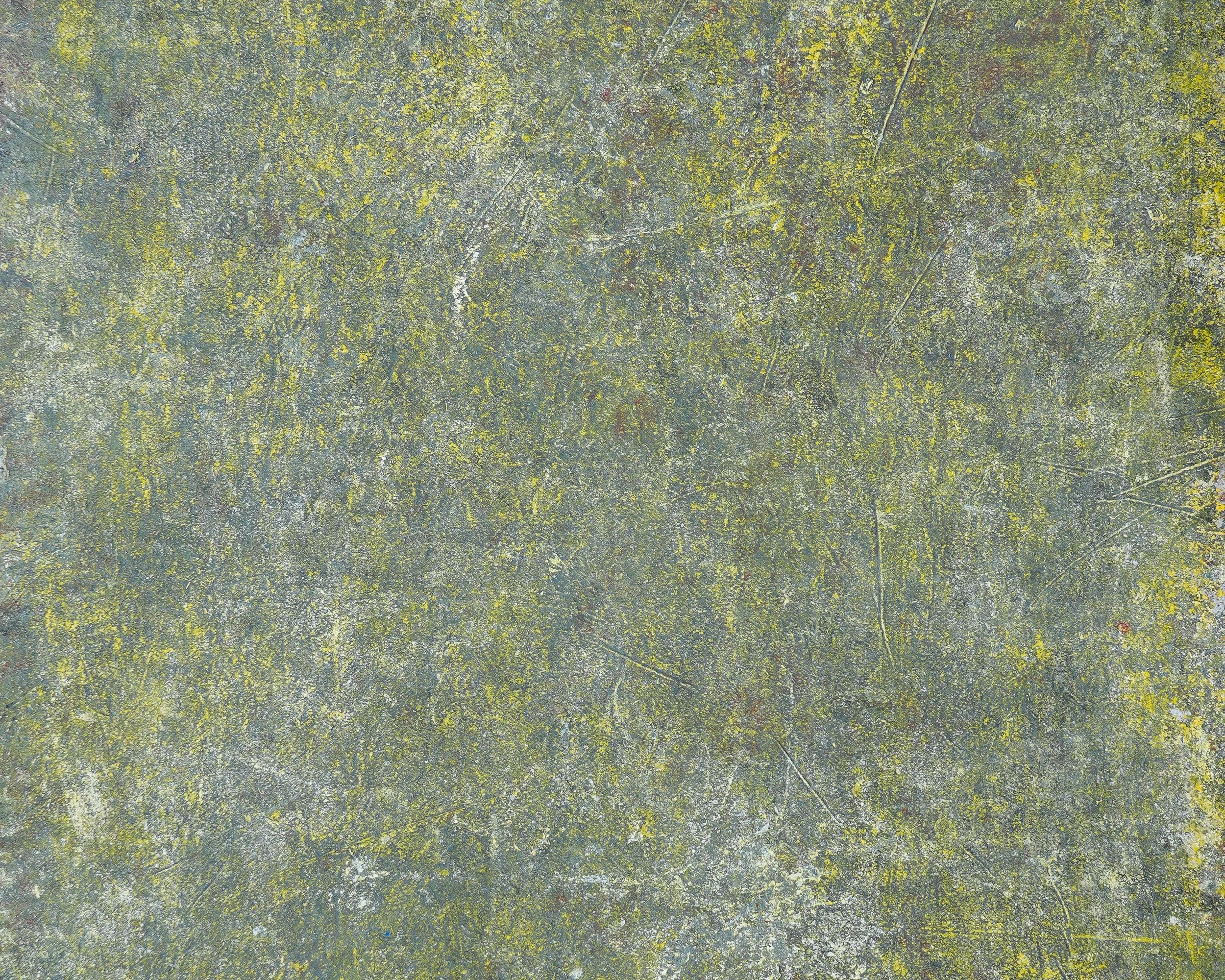
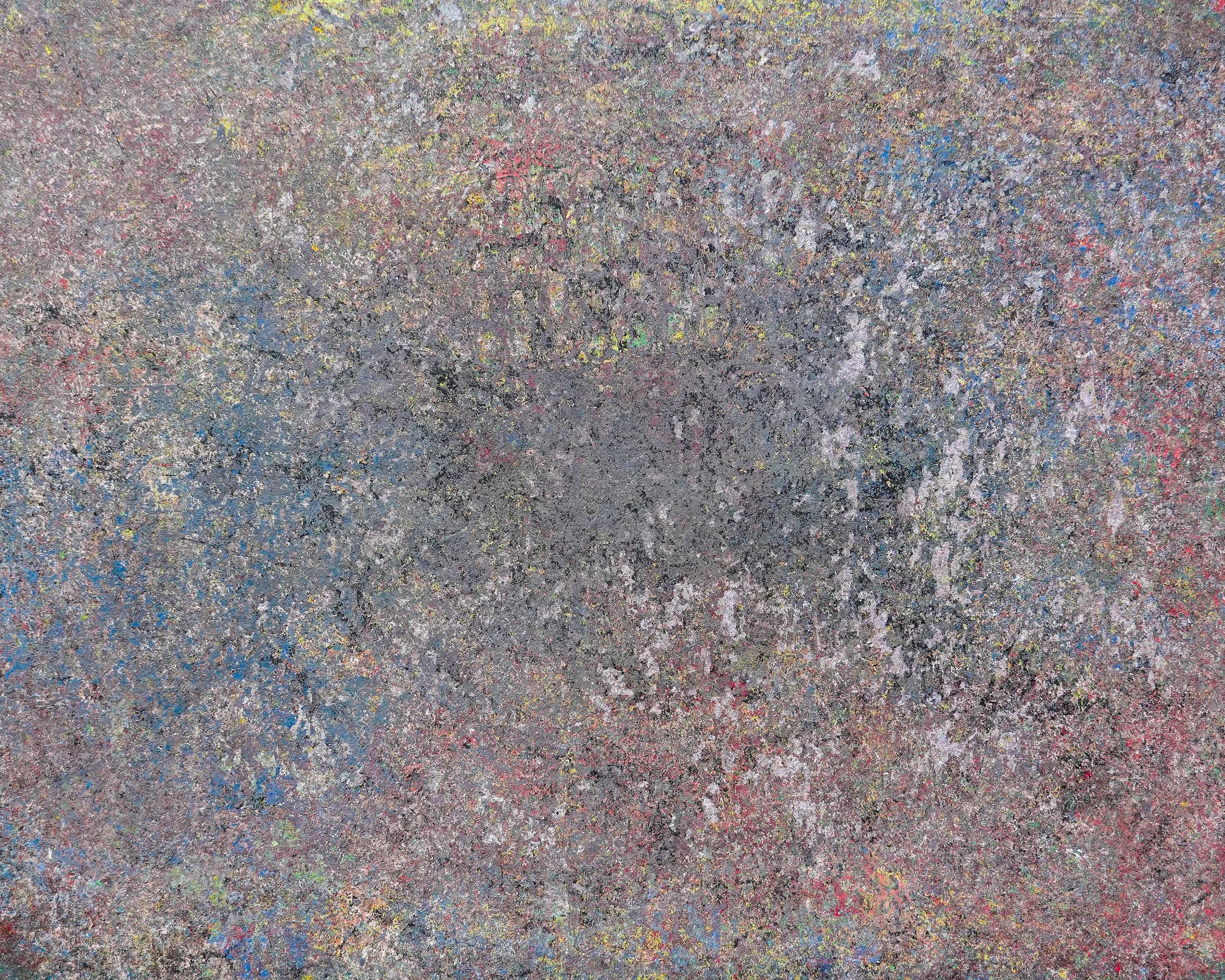
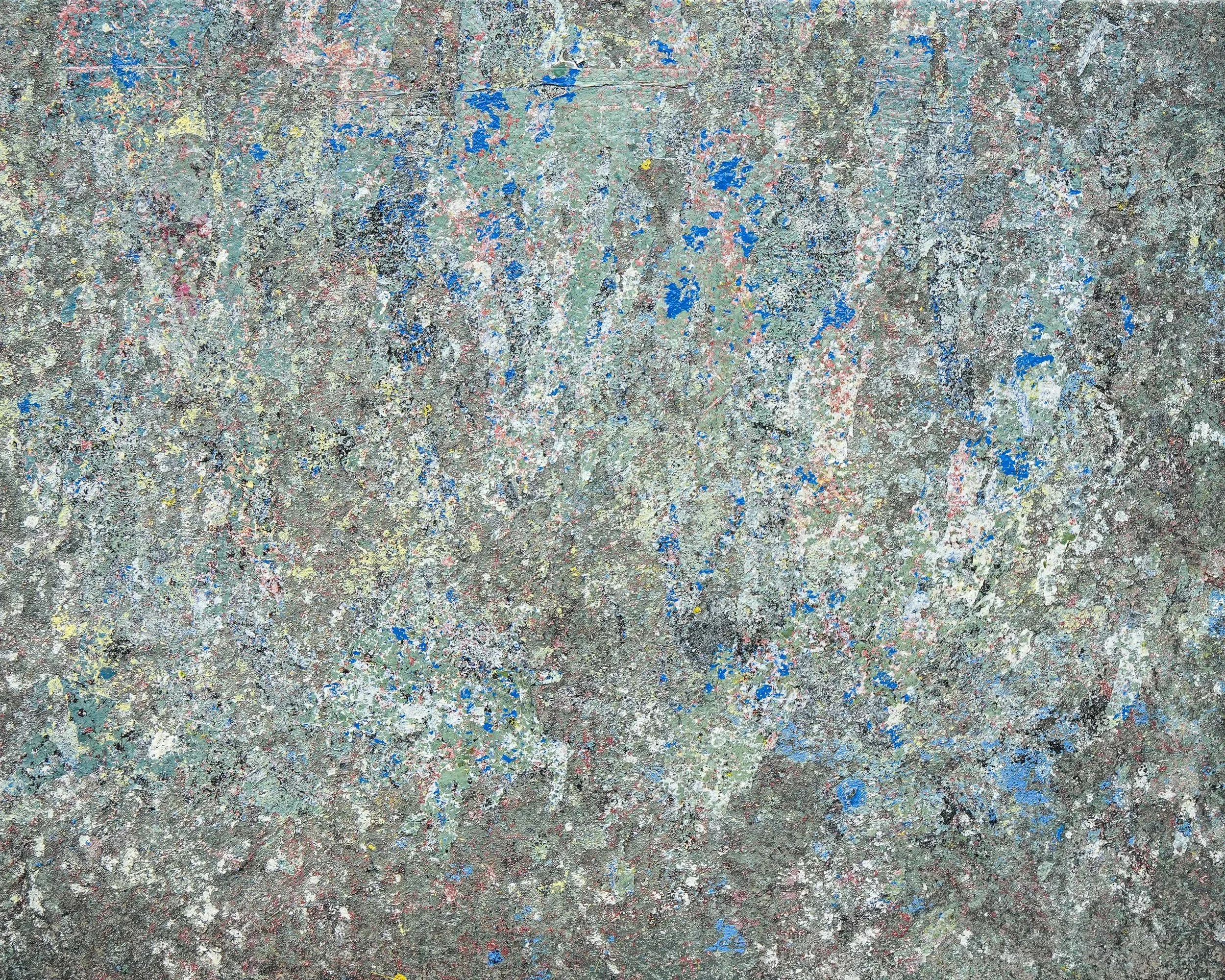
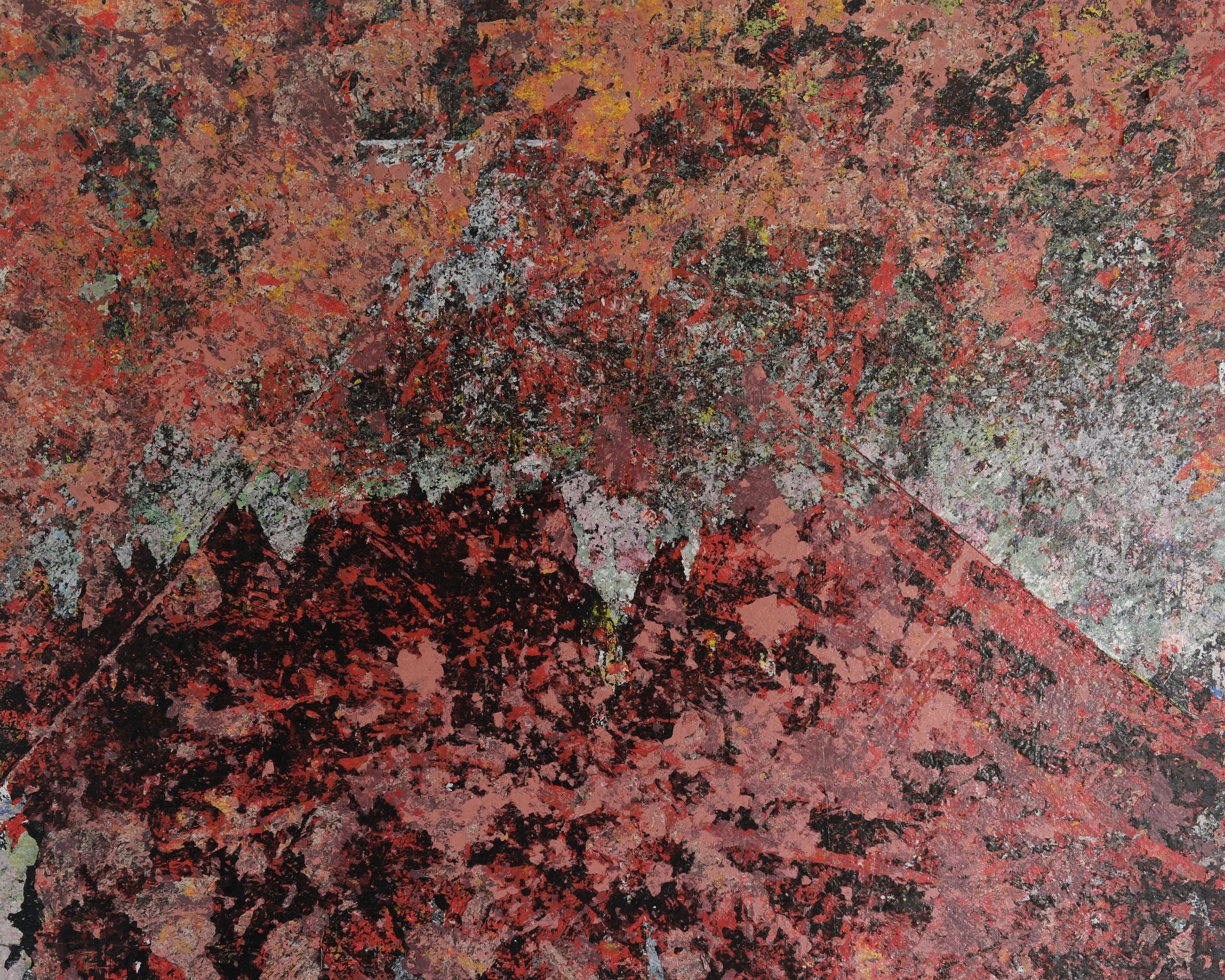
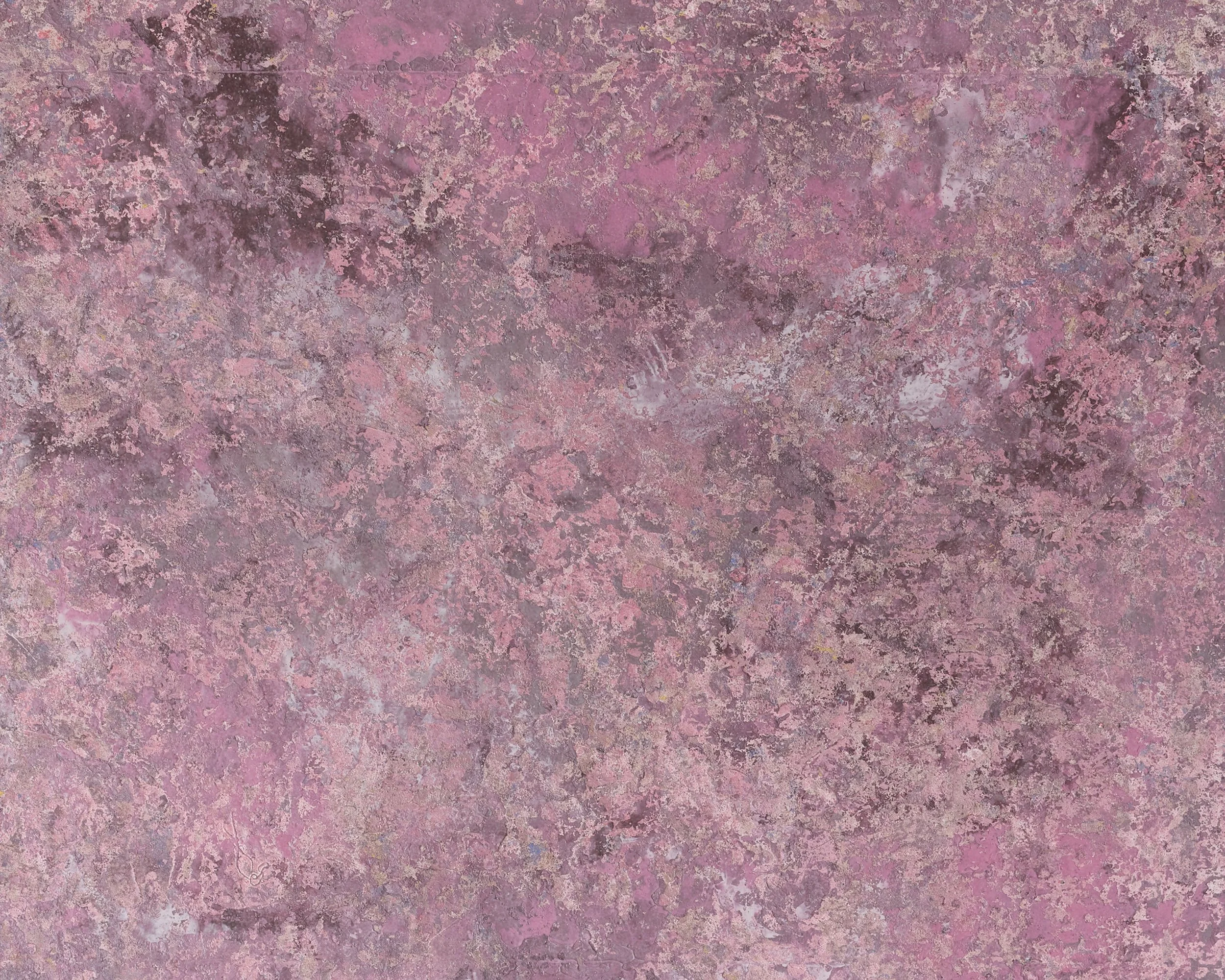
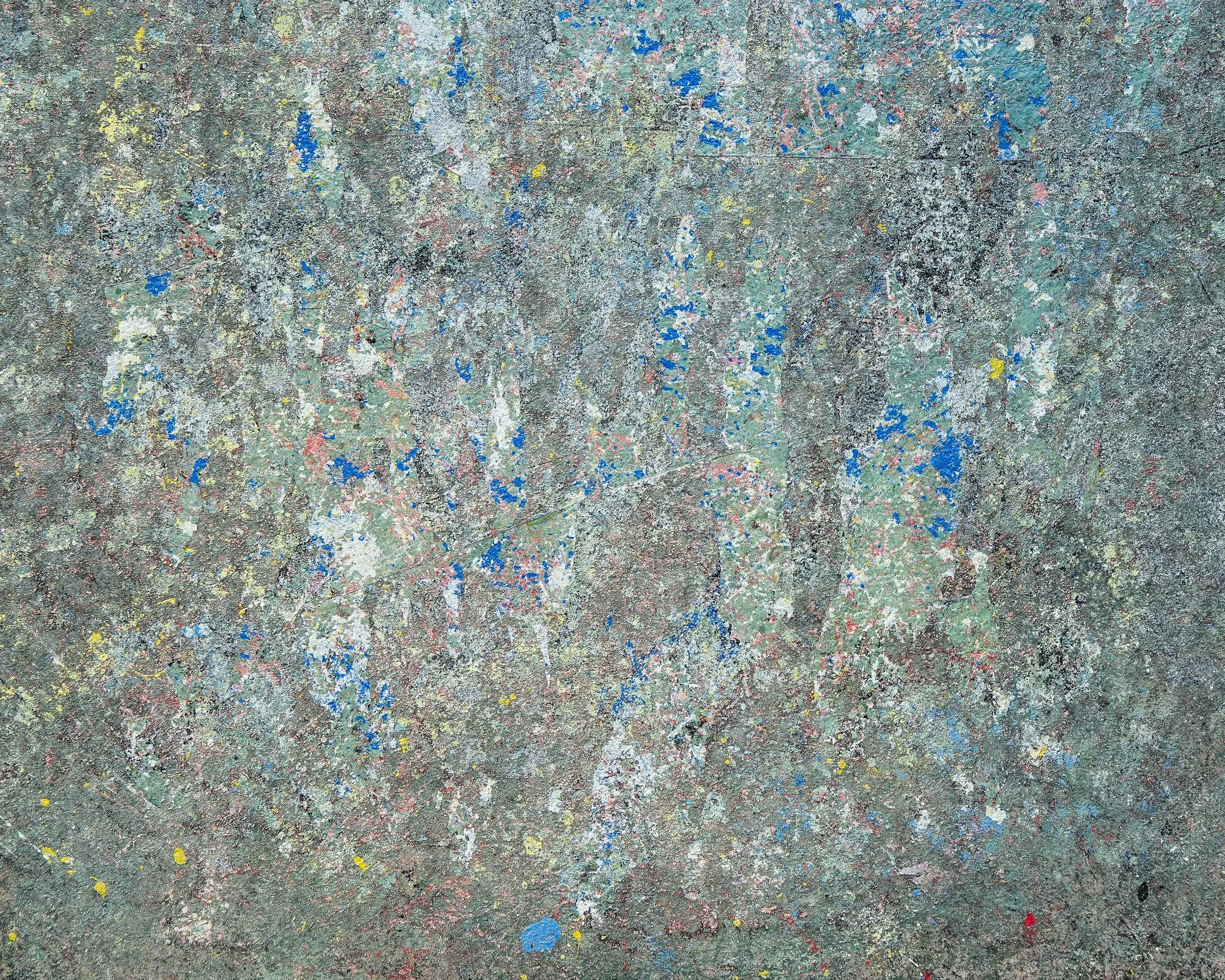
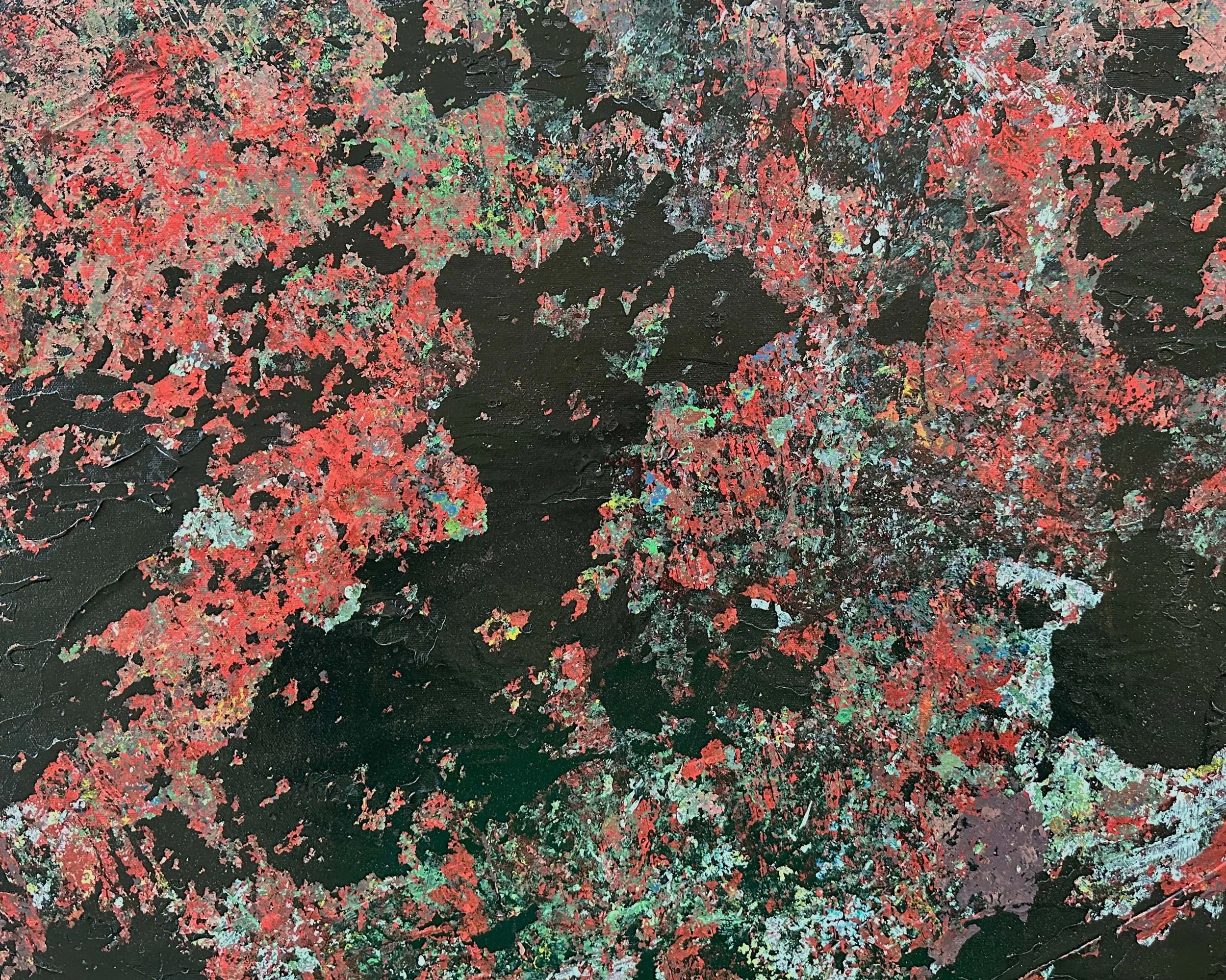
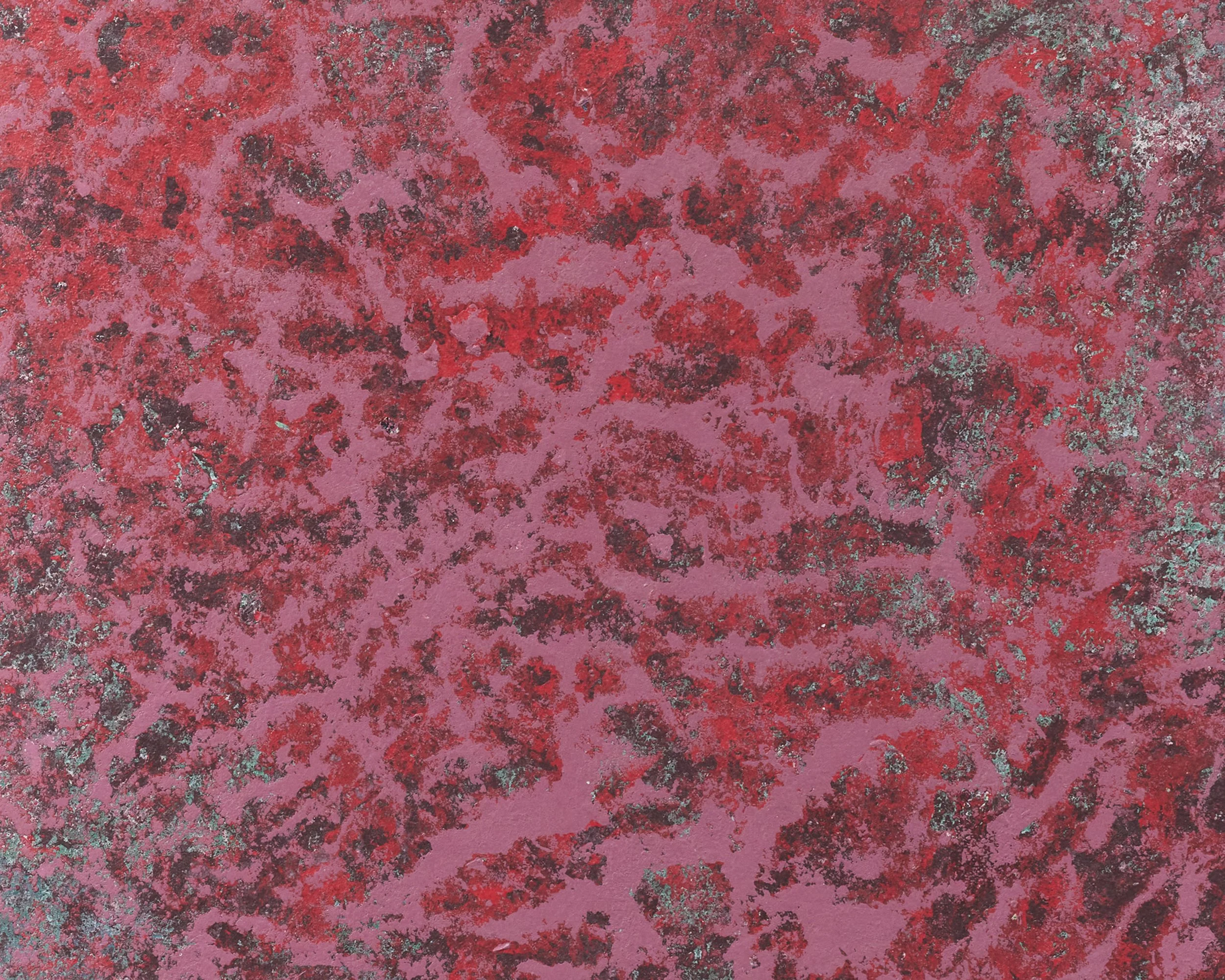
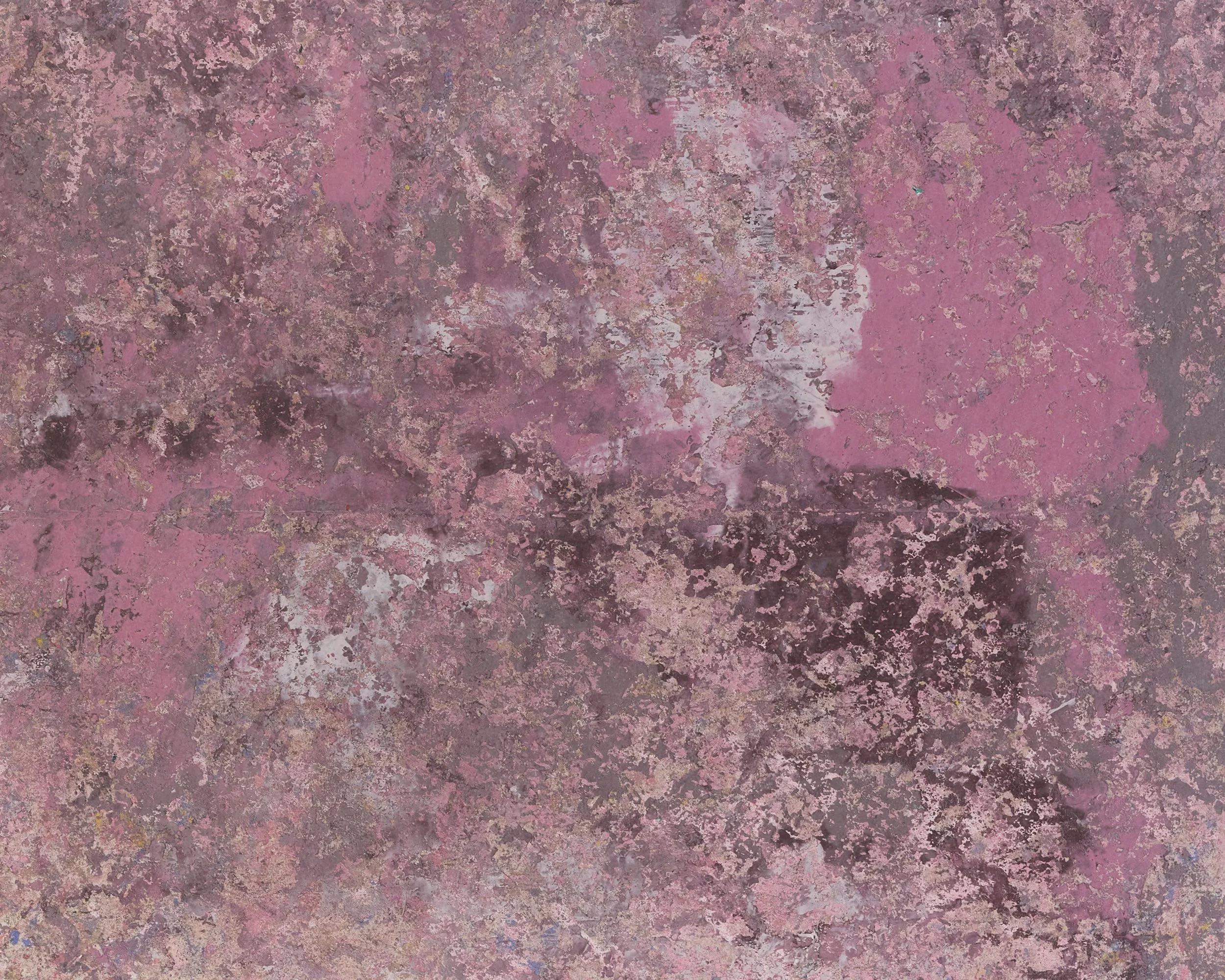
The process is essentially erosive;
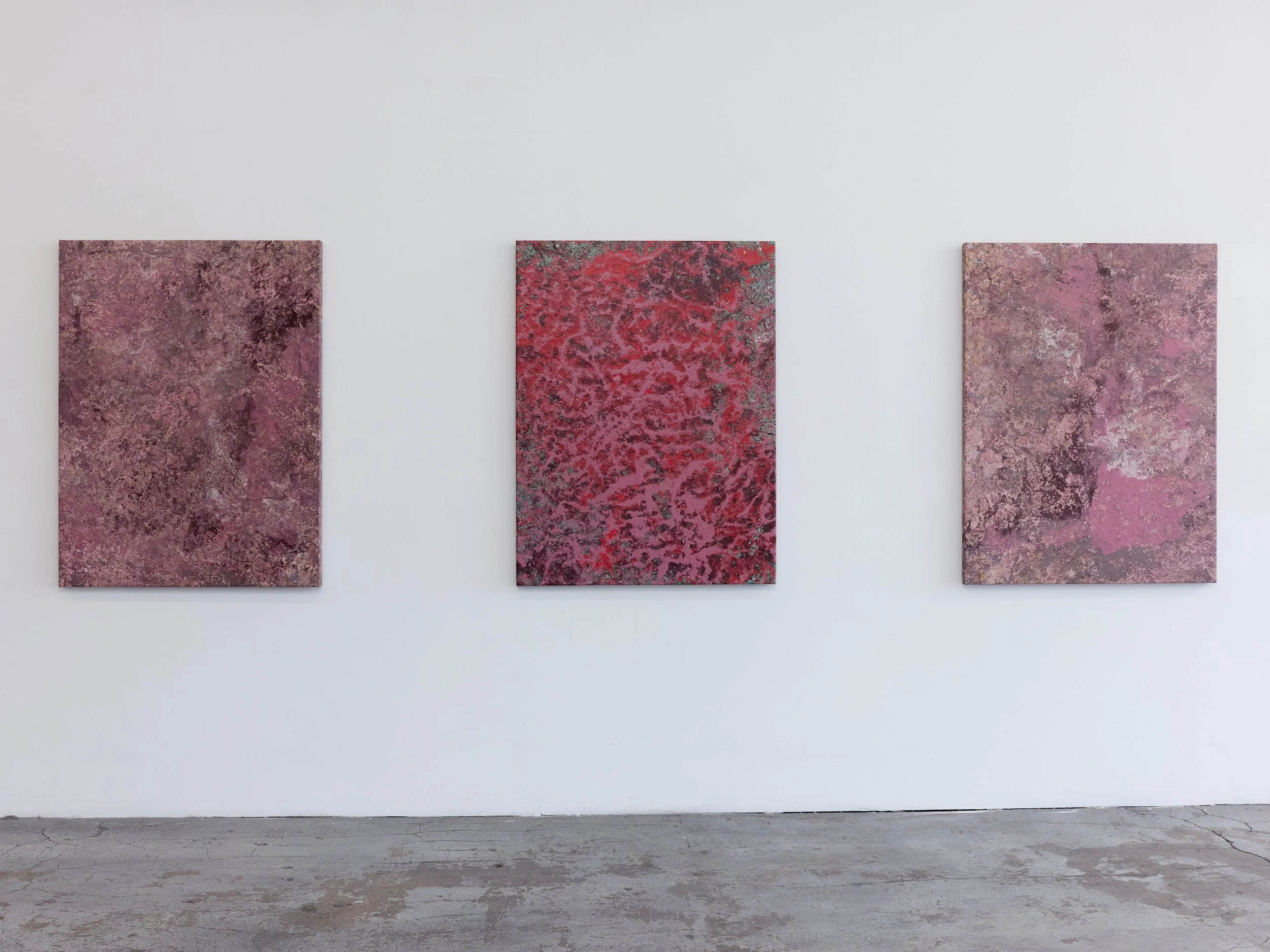
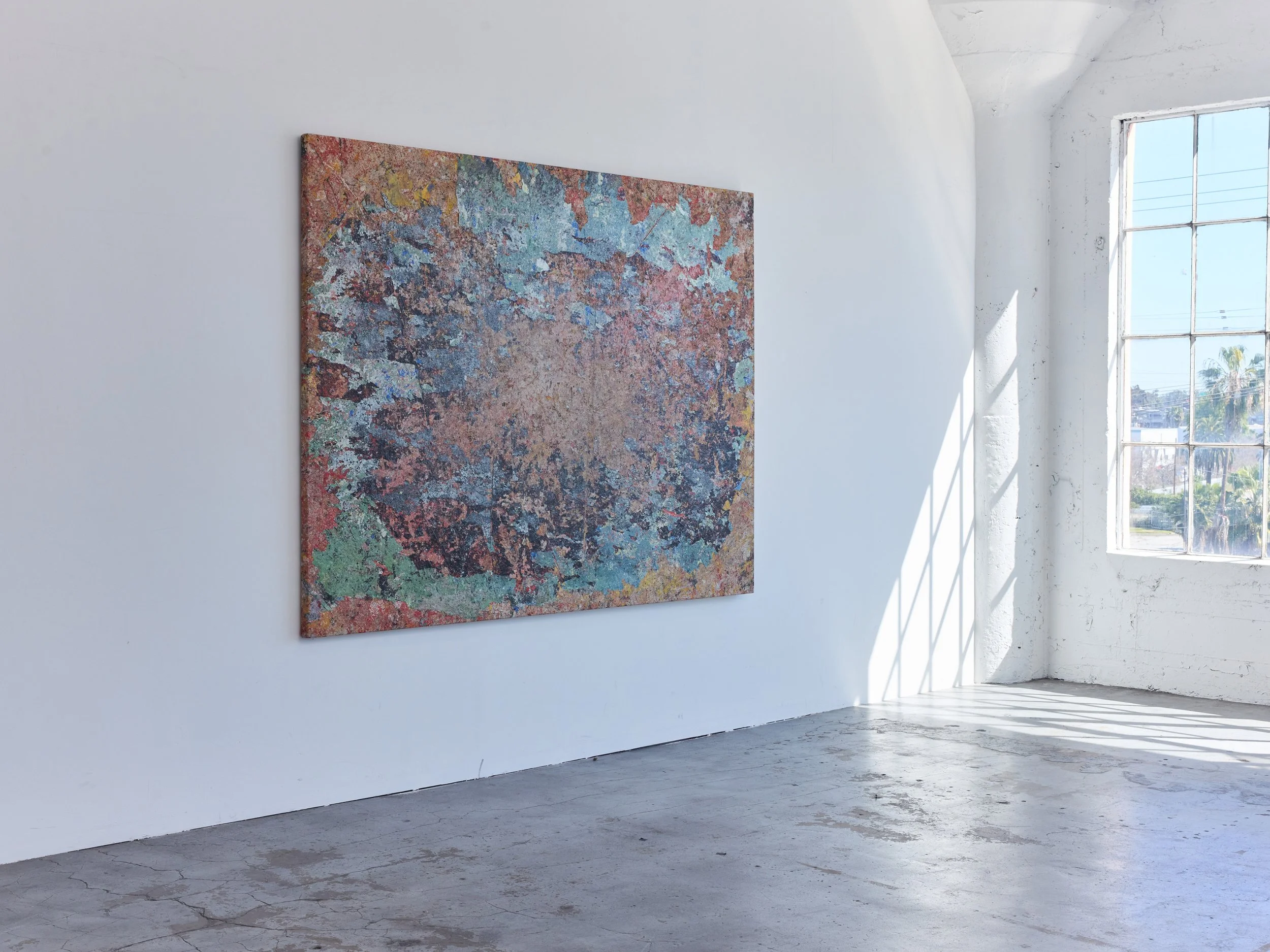
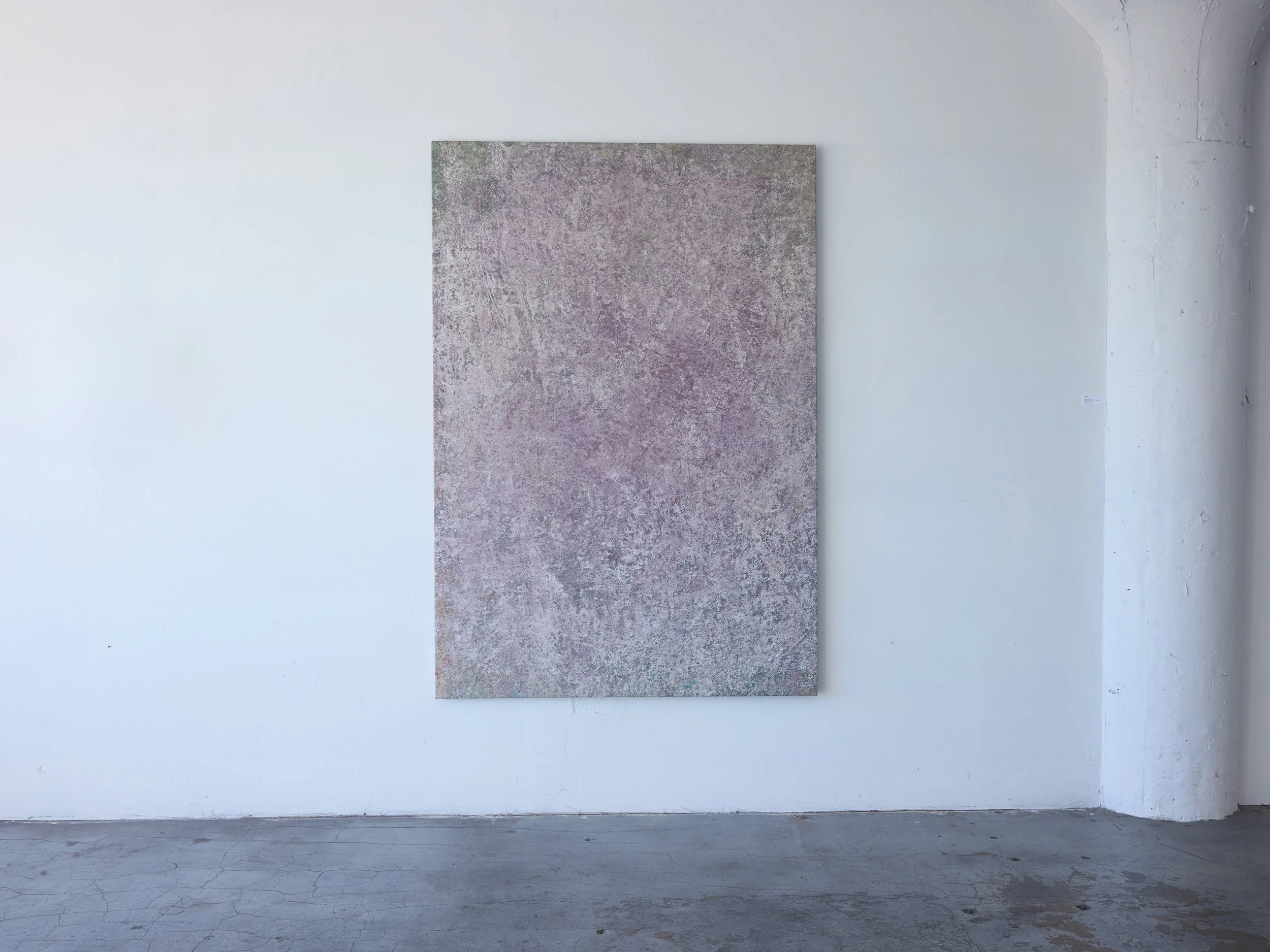
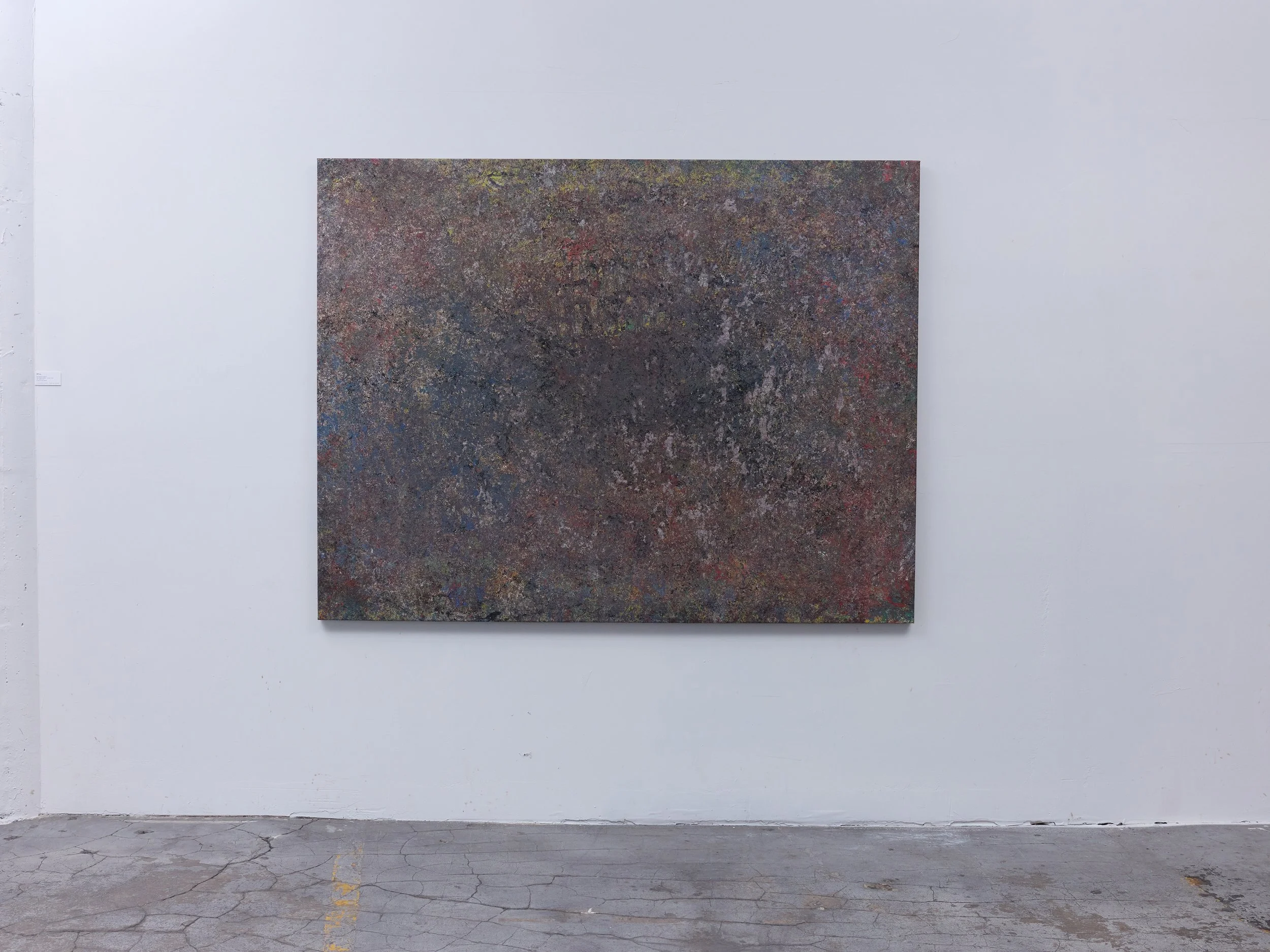
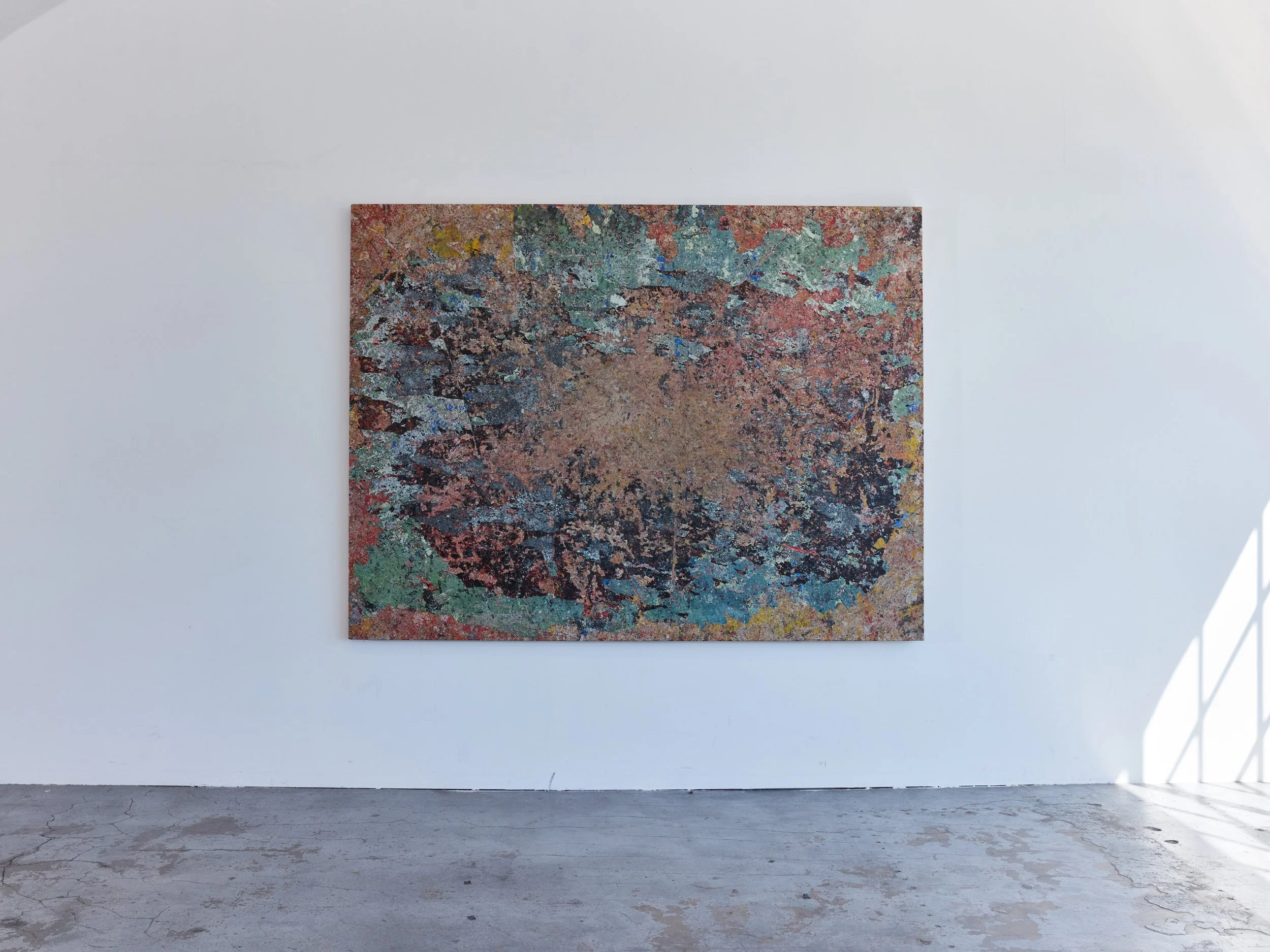
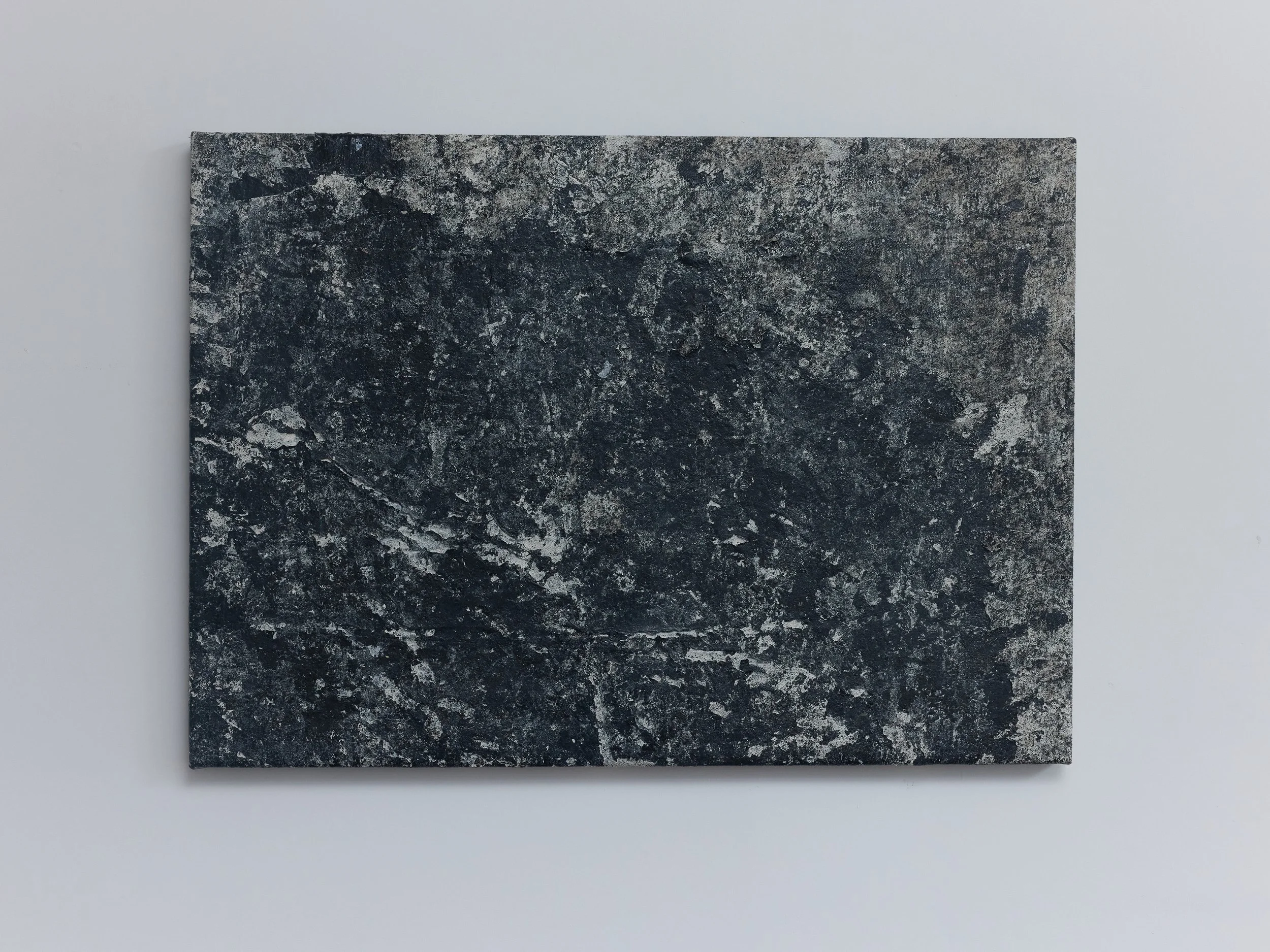
paint is buried and then partially exhumed, so that finished surfaces carry a fine, almost mineral texture, with color from earlier layers bleeding through as faint, residual traces.
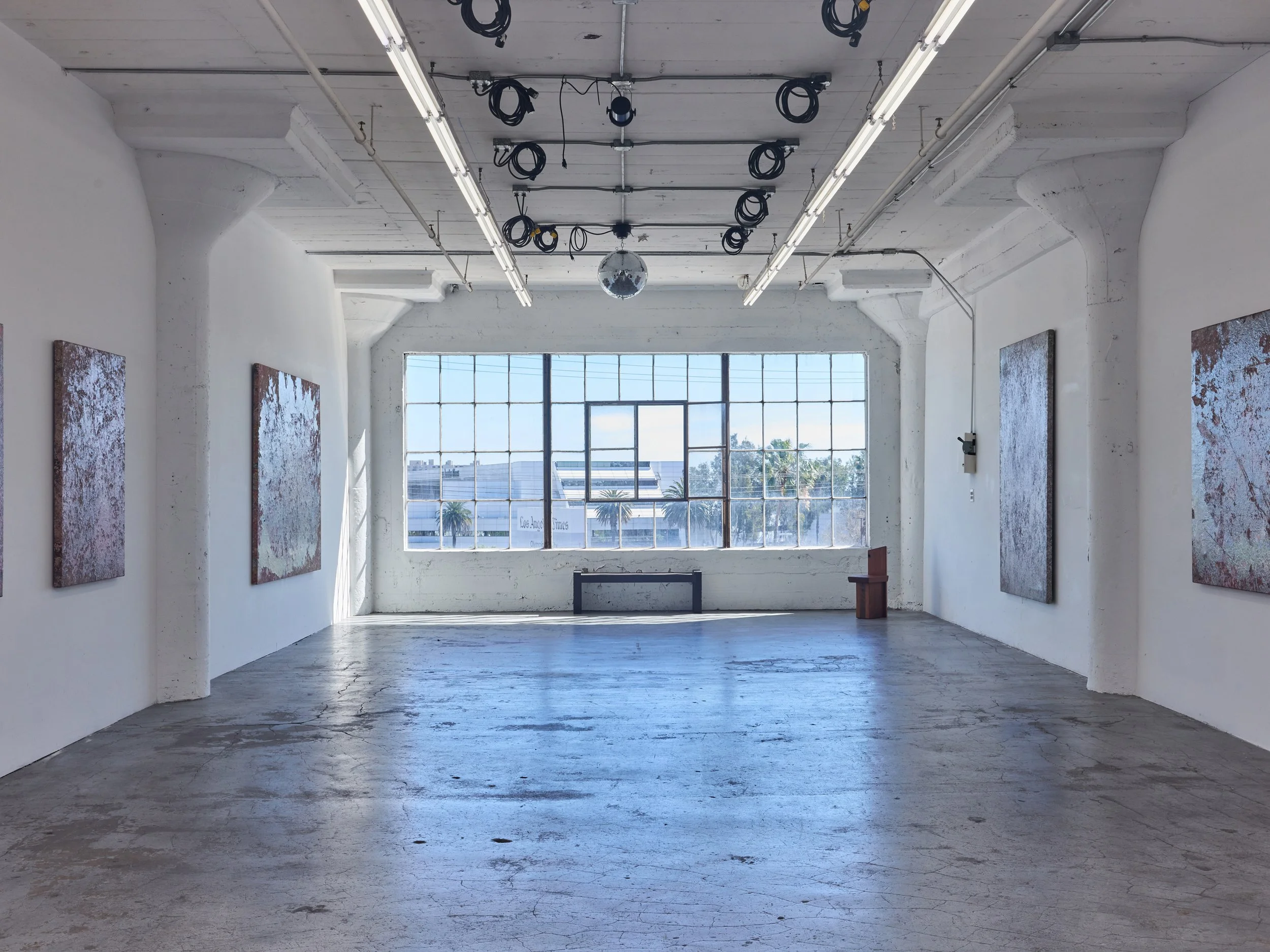
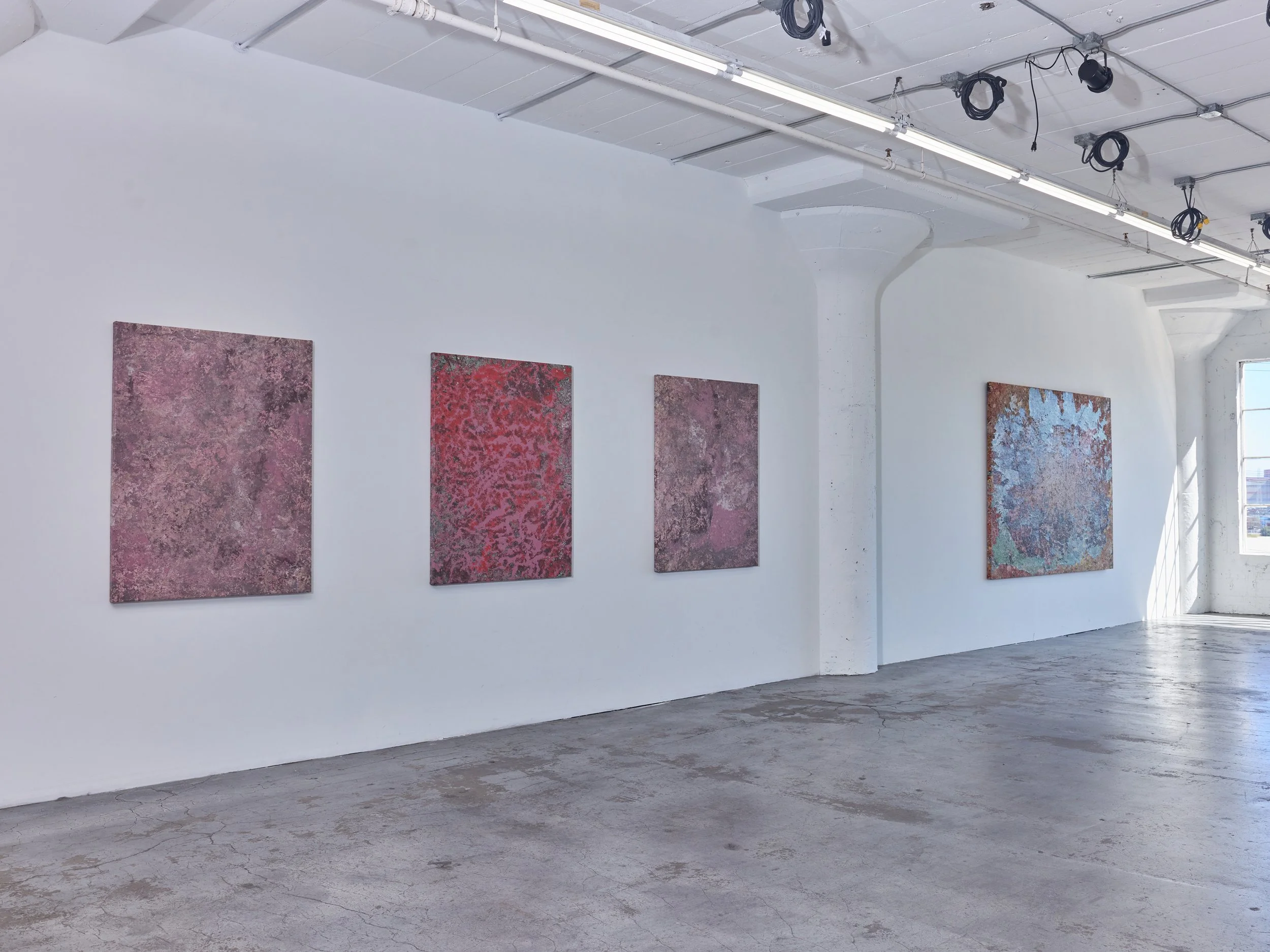
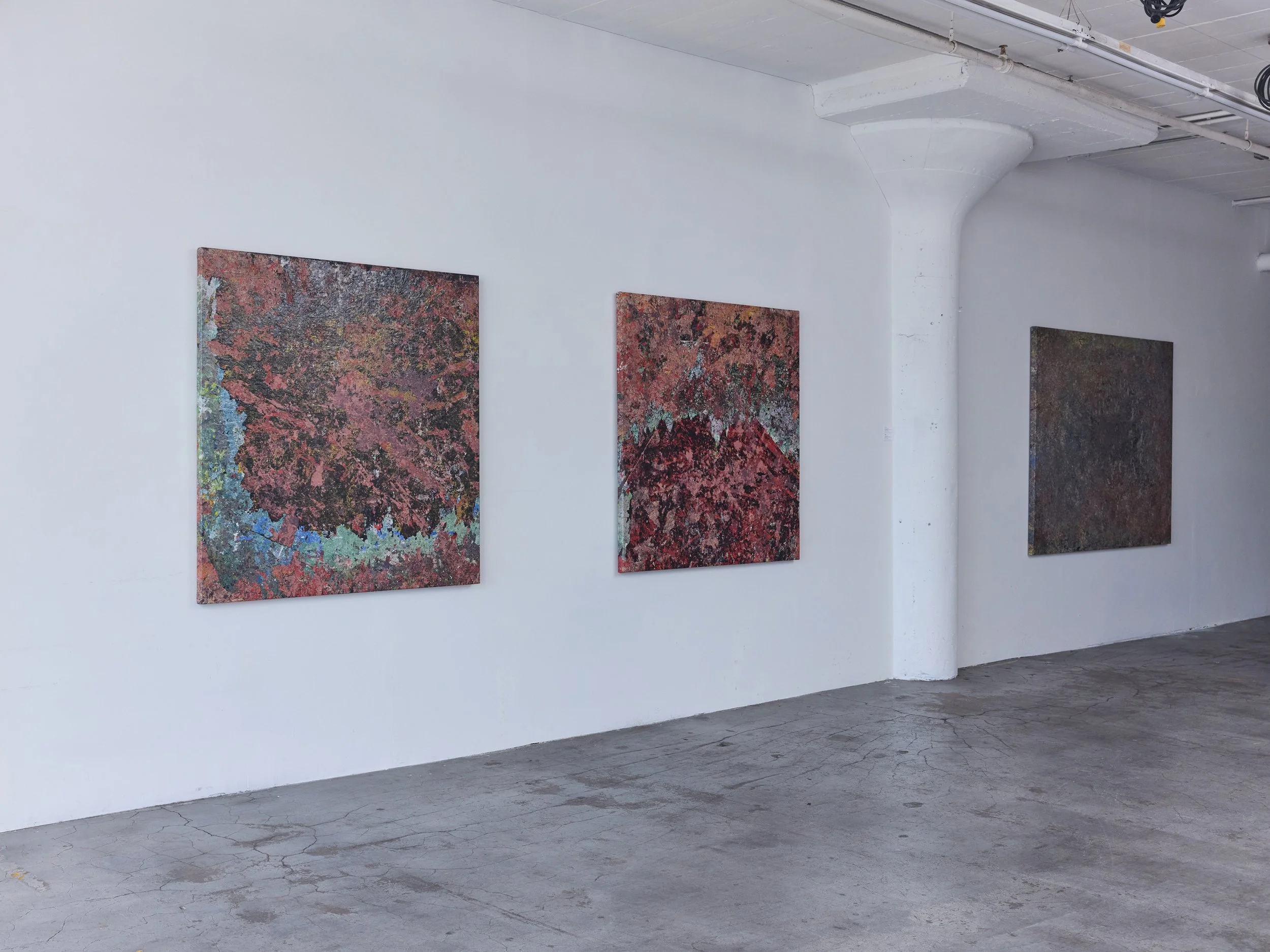
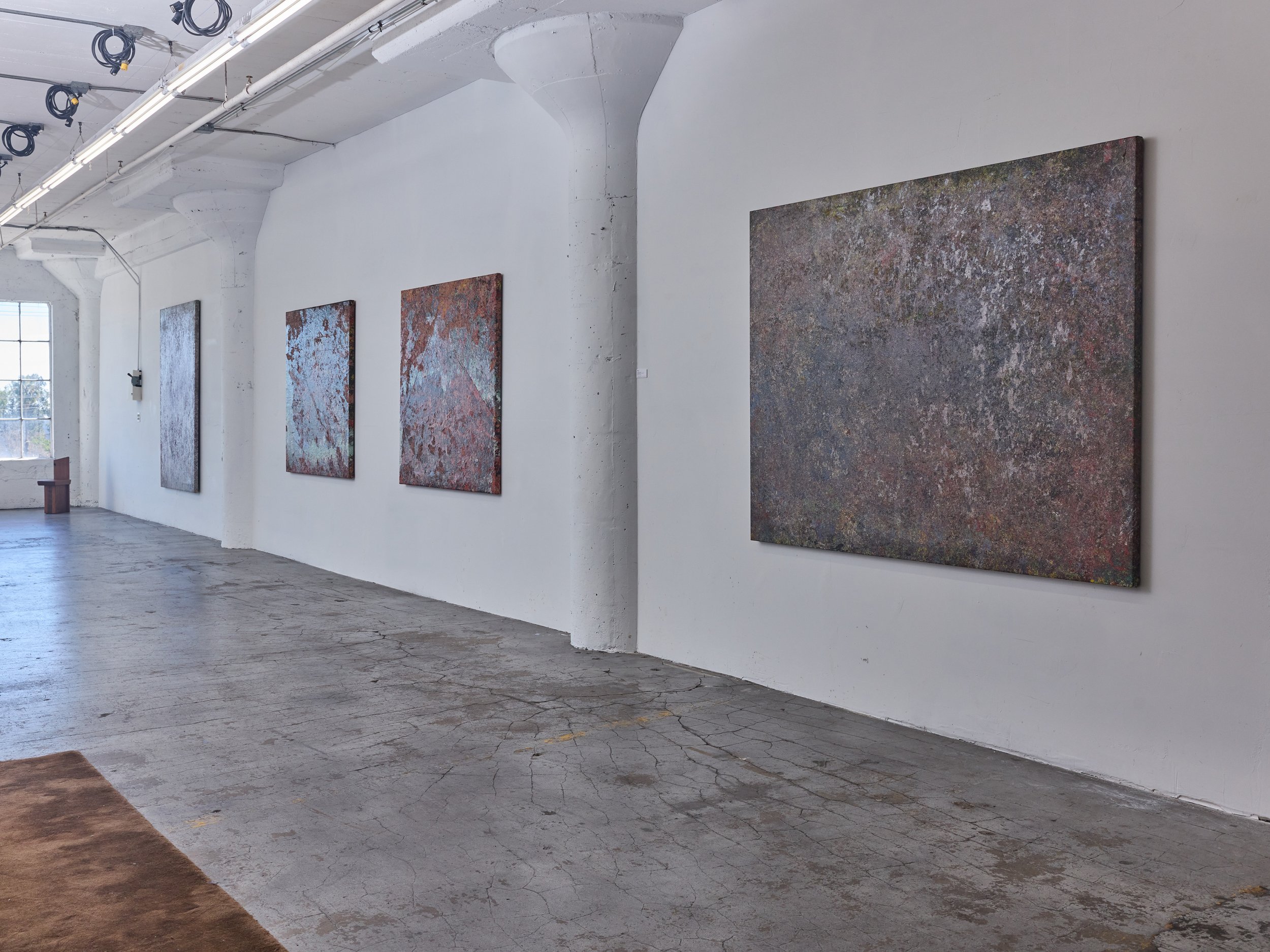
Presented unframed, with raw canvas edges exposed, the paintings occupy a wall the way an excavated fragment or a section of aged concrete might, and it is this object-like presence that allows them to hold their own against the materials of contemporary architecture.
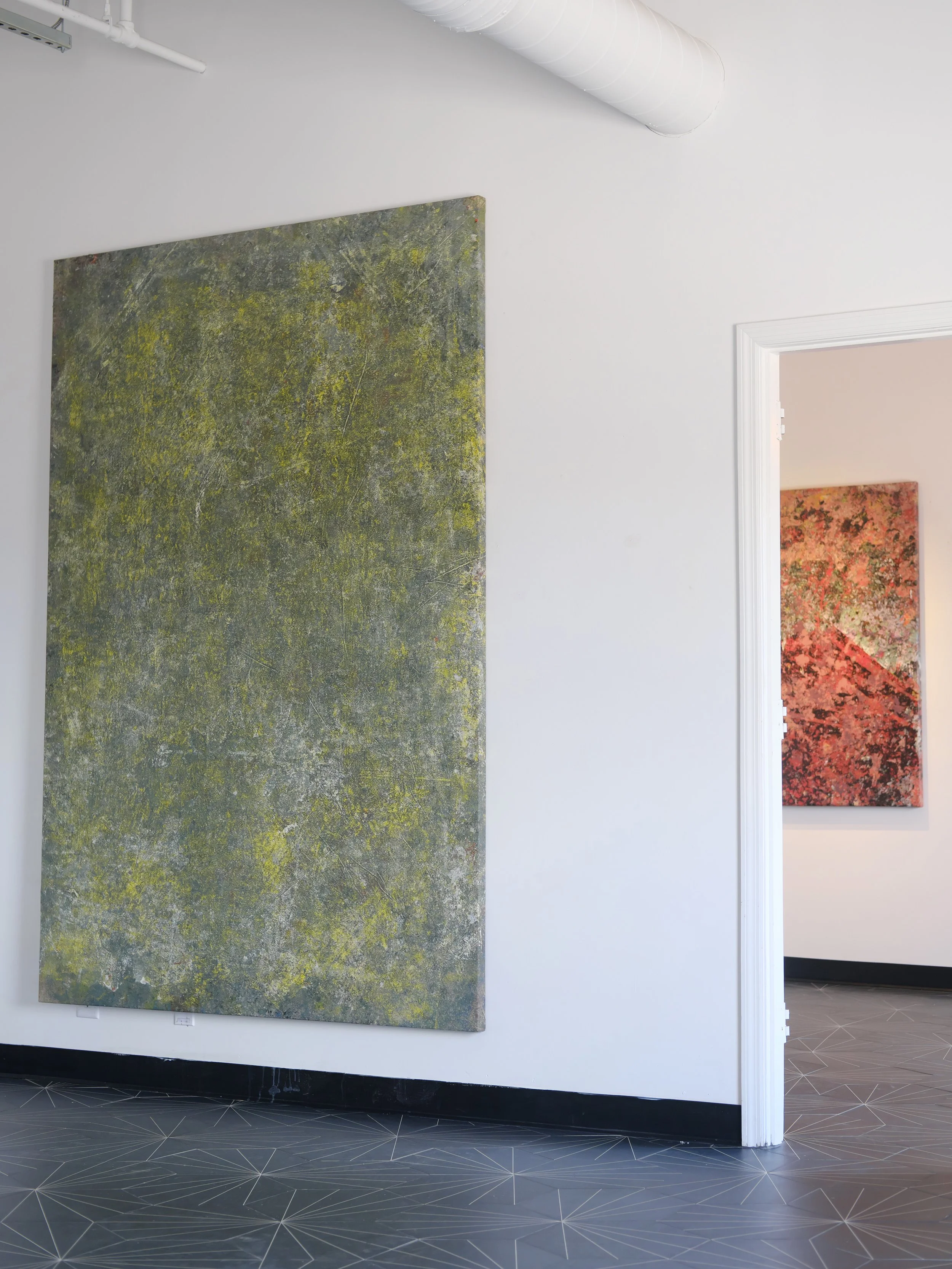
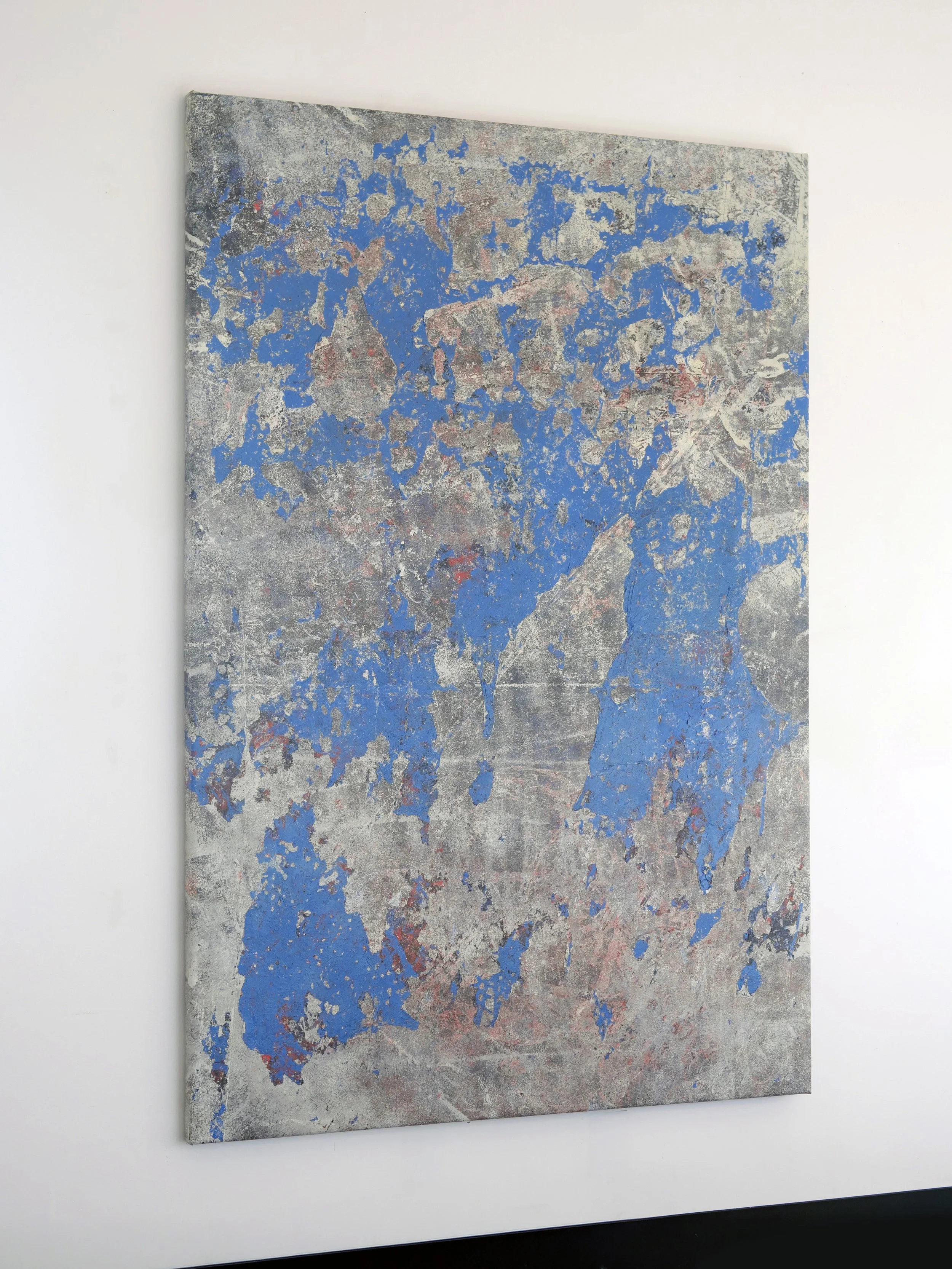
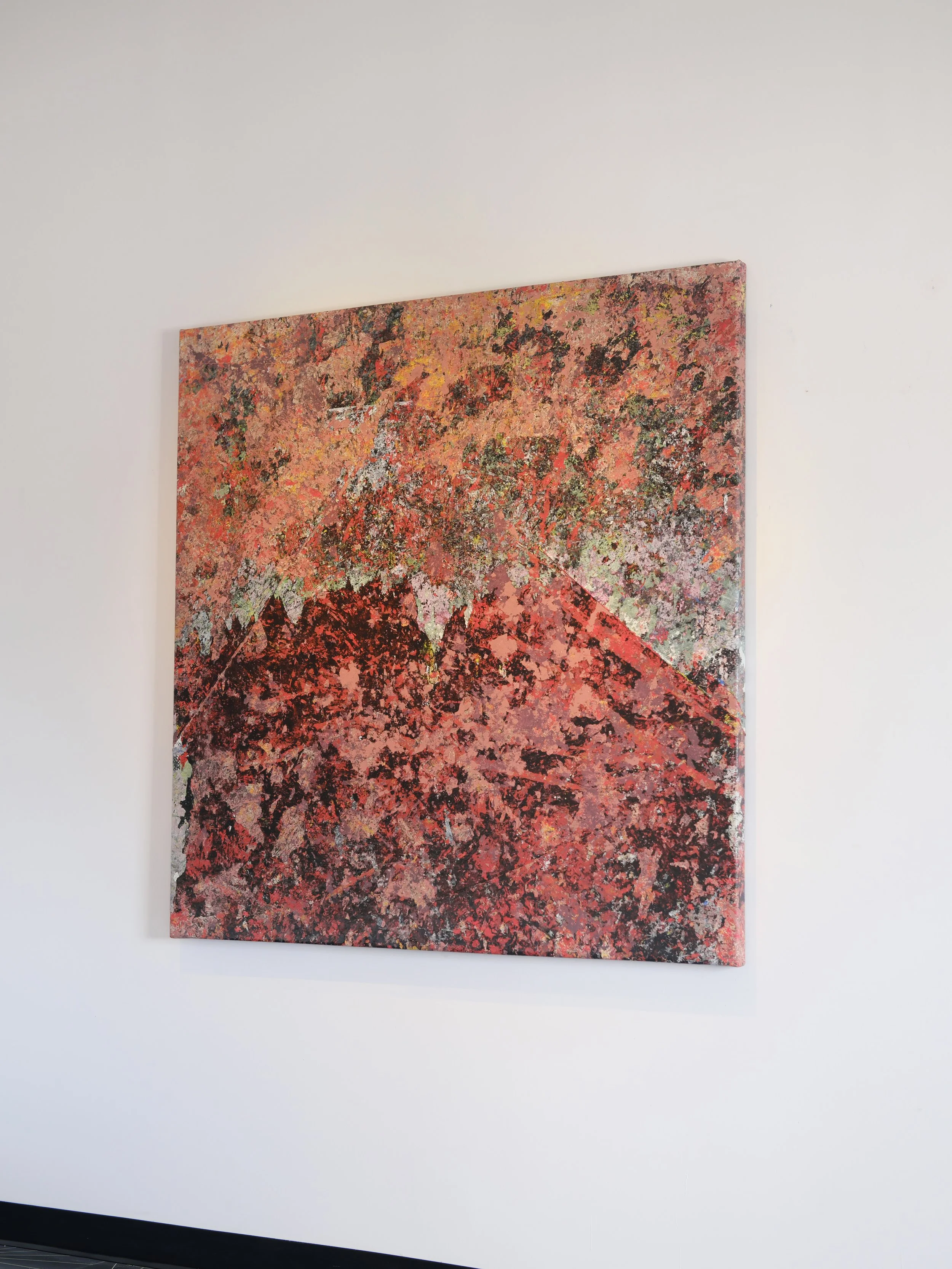
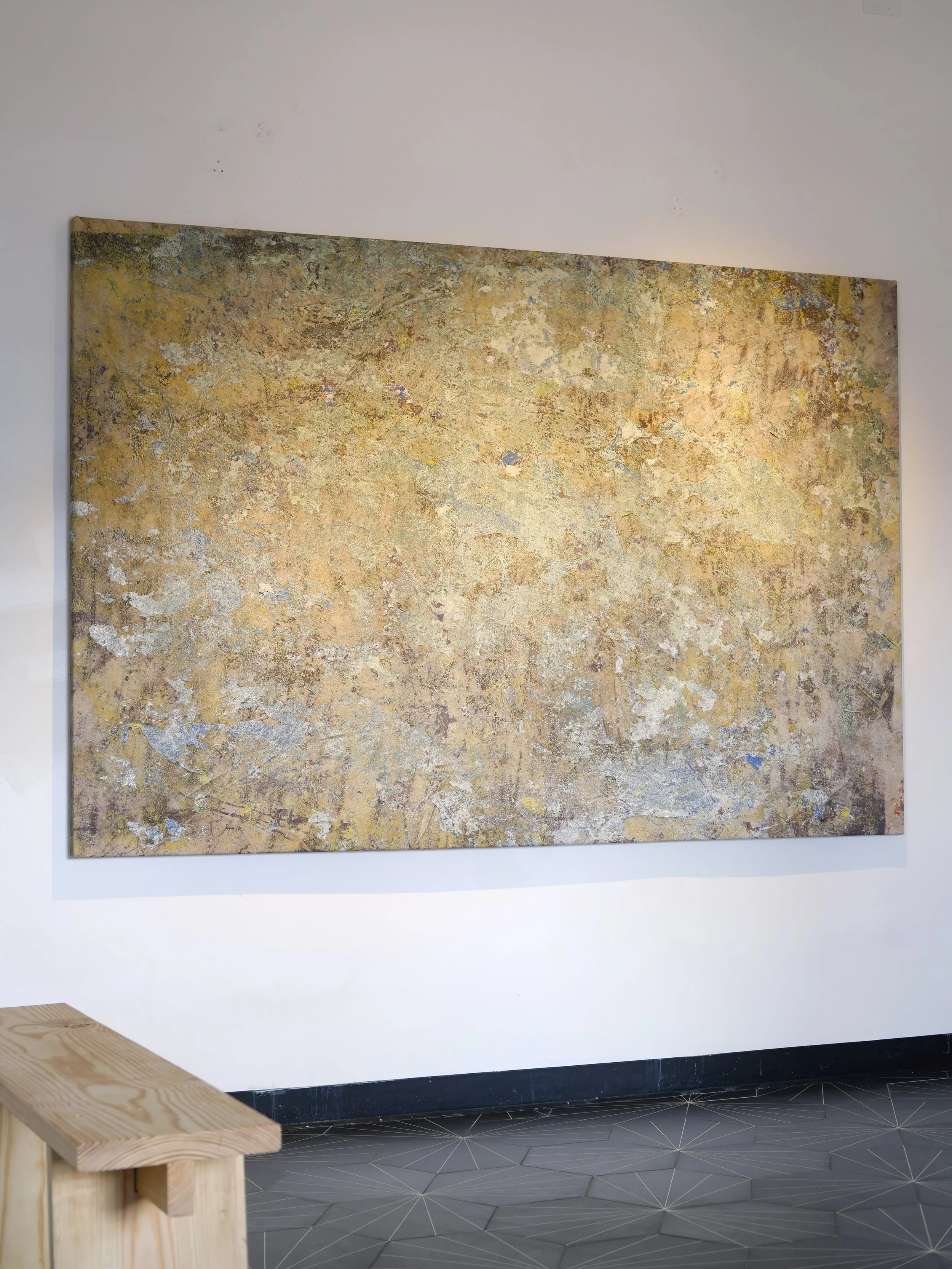
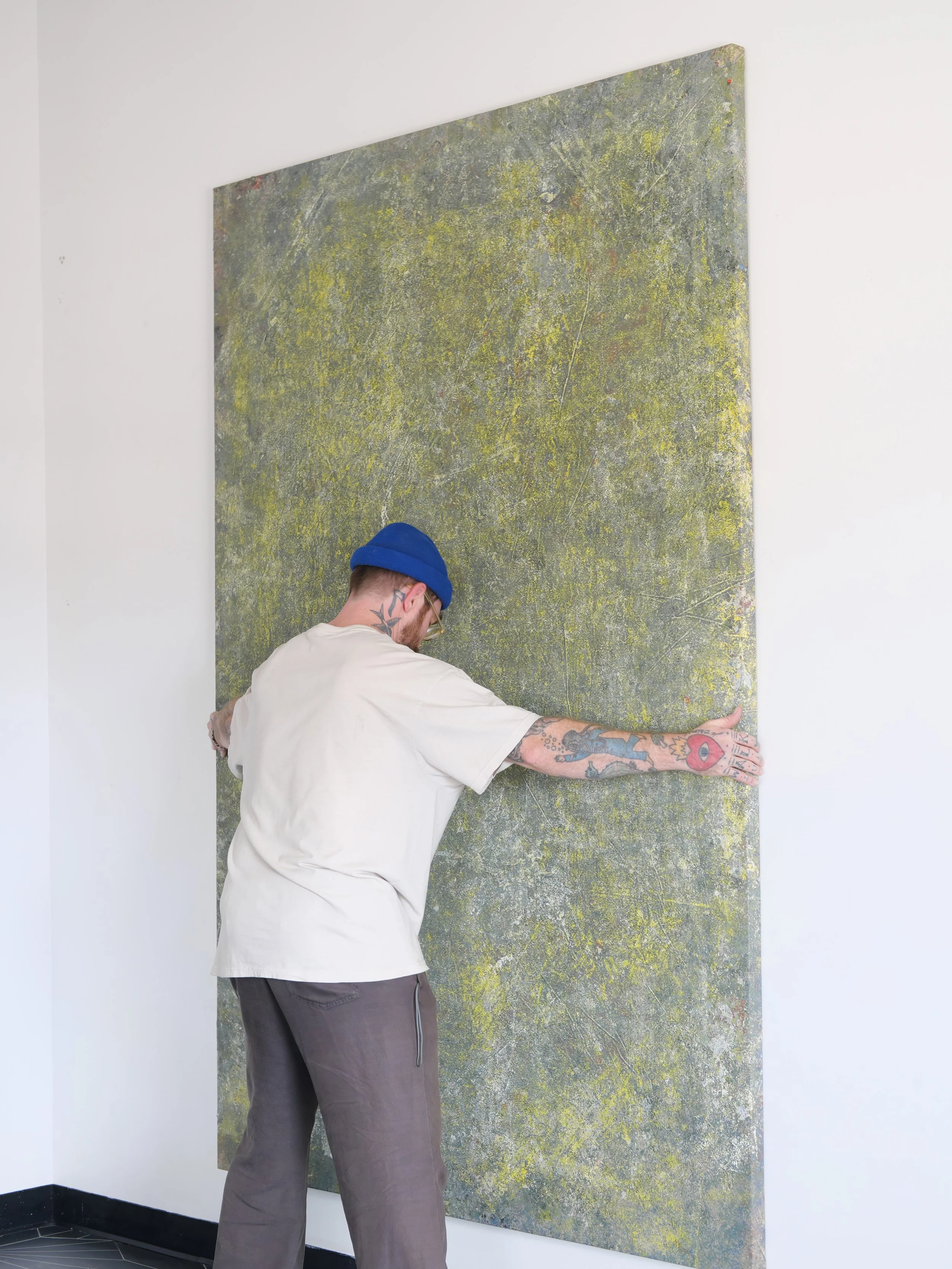
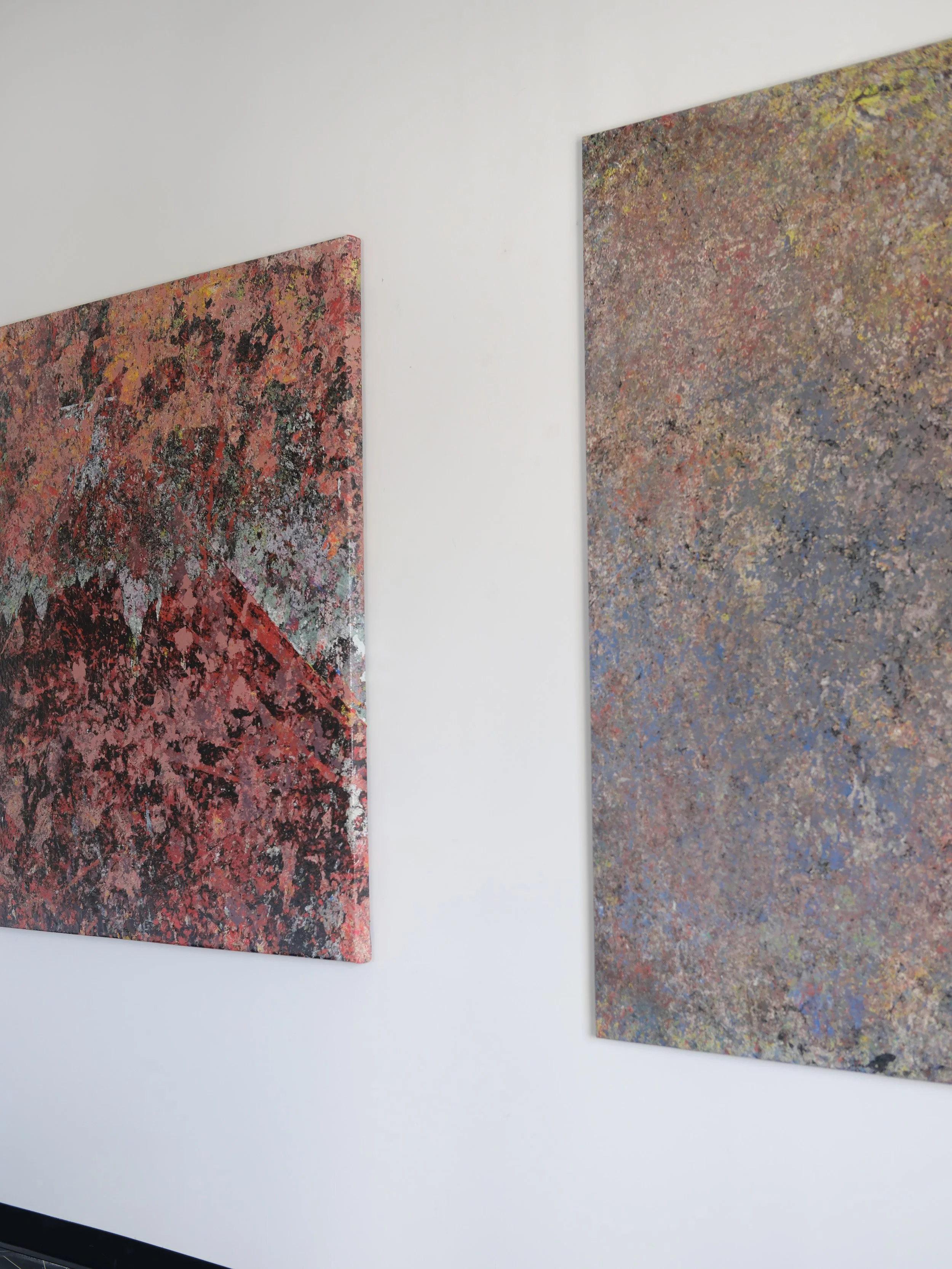
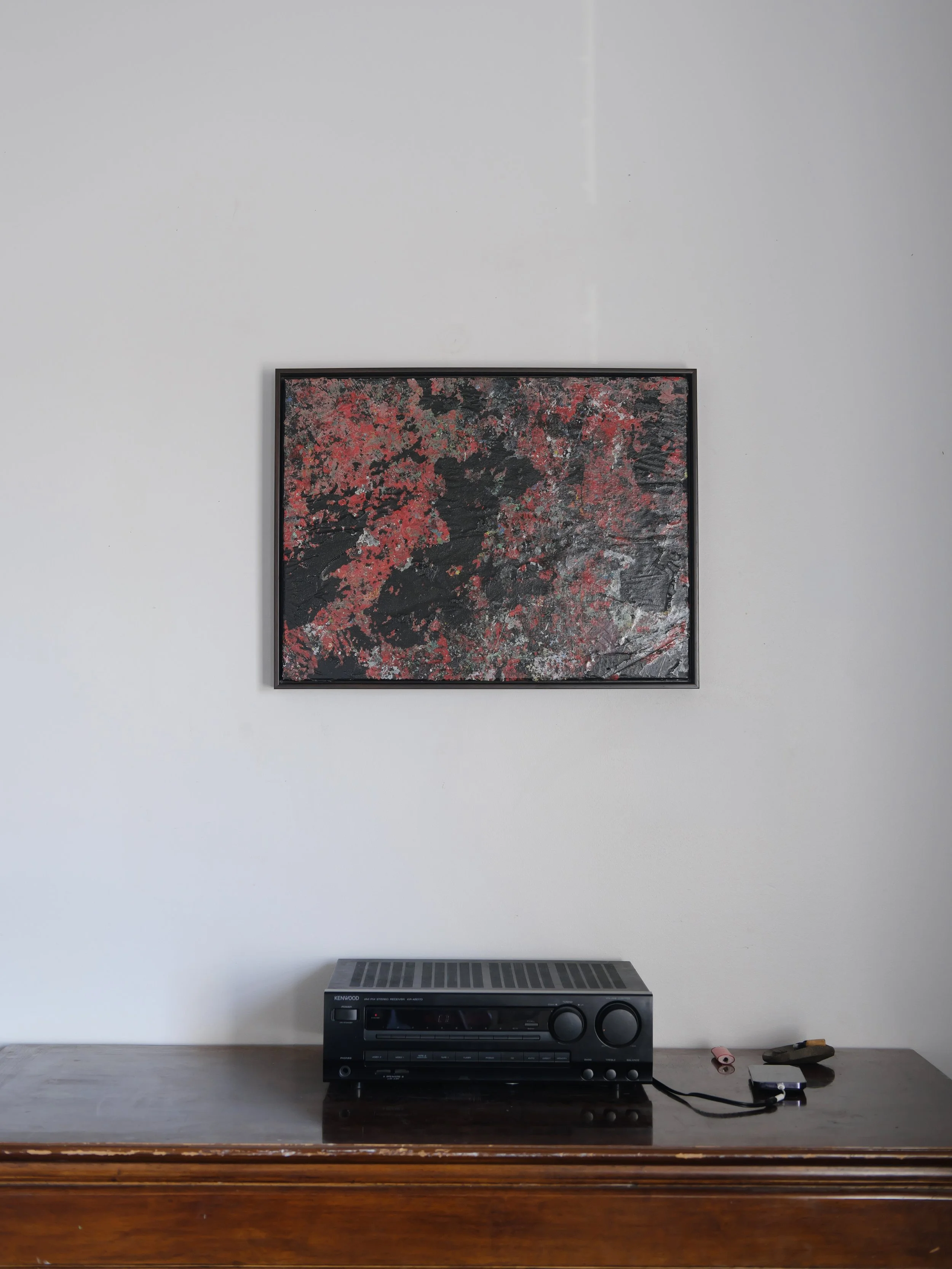
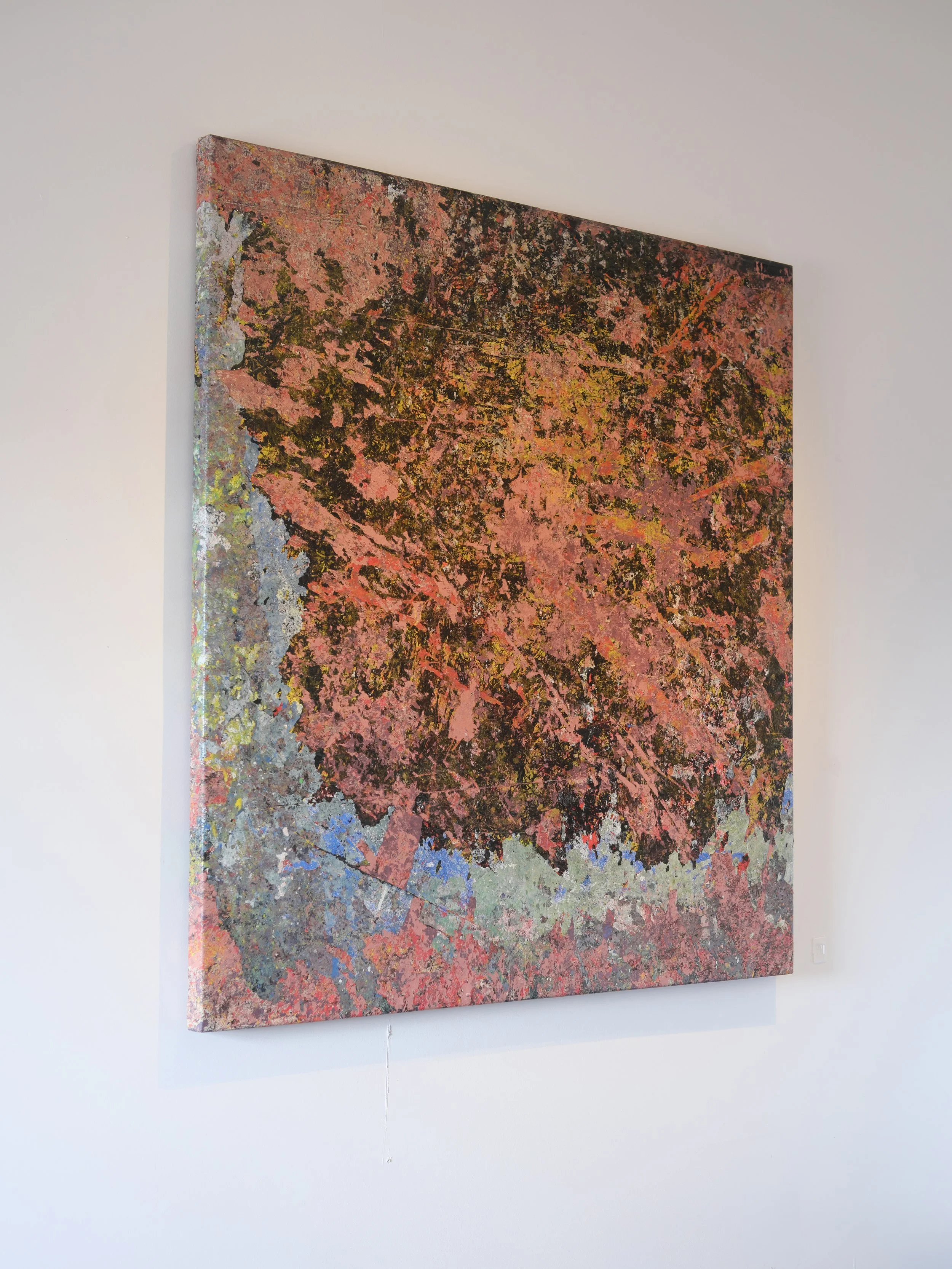
Foster identifies his paintings through a numbering and Greek-letter system that functions as a kind of private index. Letters correspond to conceptual states (psi for contemplation, rho for resonance, lambda for liminality), while subscripts track sequence within a given mode, so that the titles operate less as descriptive labels than as notations in an ongoing, open-ended classificatory project.
The system is legible enough to suggest that the work proceeds from something more structured than pure intuition, but opaque enough to leave the viewer’s own associations undisturbed, and in this sense it mirrors the paintings’ own relationship to meaning, which is to say, suggestive but not insistent.
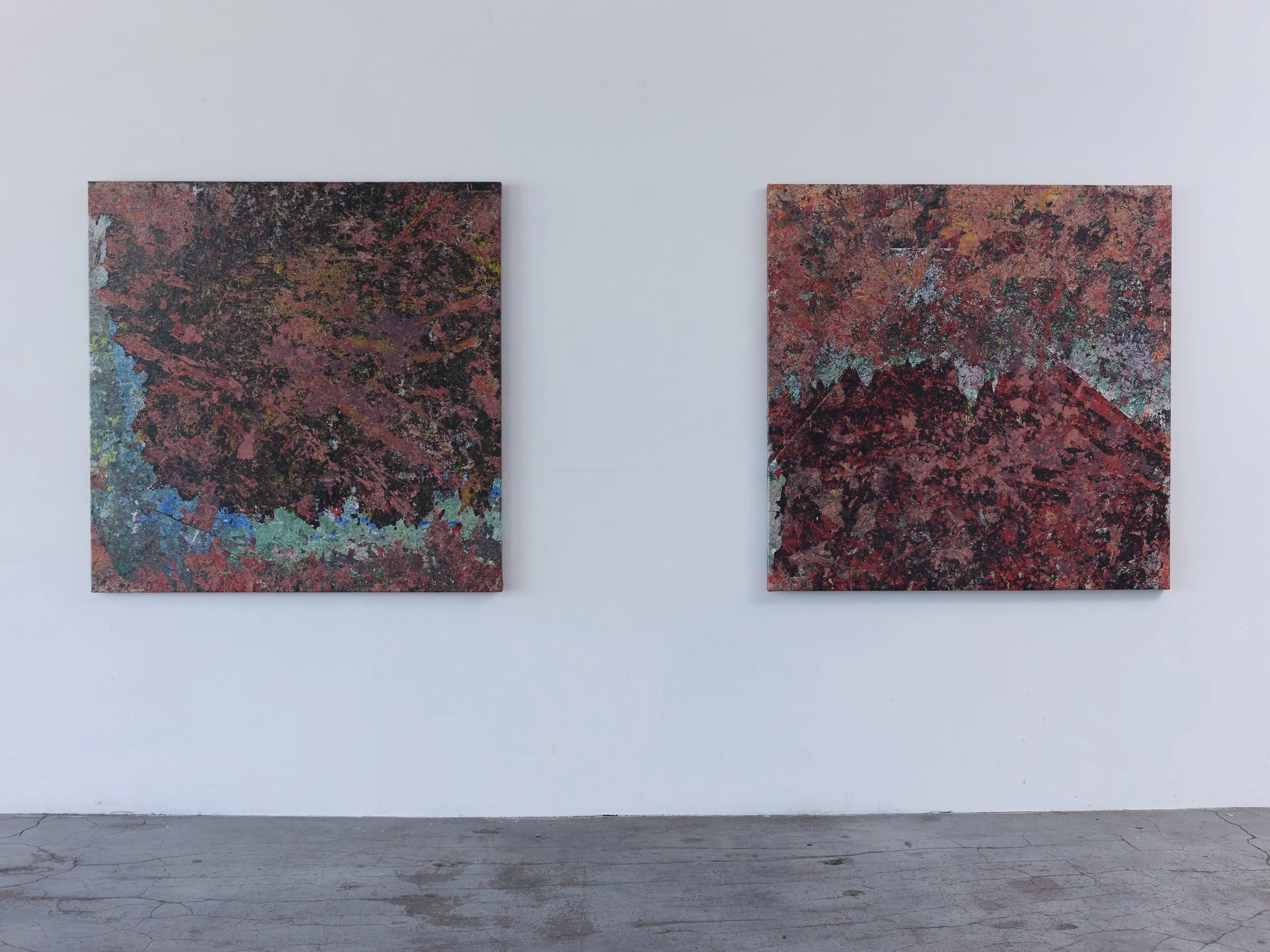
The Listening Series, from which these works are drawn, spans roughly two years and traces a visible evolution in scale, palette, and density, with earlier canvases tending toward cooler, more diffuse fields and more recent works concentrating color and compressing gestural energy into tighter formats.
There is also a considerable structural range within the series that resists any easy characterization of the work as uniformly non-compositional: certain paintings organize around an internal gravity, pulling toward a dense, near-black center with color surviving only at the outermost edges, while others distribute pigment across the entire surface with no discernible focal hierarchy, so that the eye is given no place to rest and no entry point to privilege over another.
That both modes emerge from the same process, and sometimes coexist within a single canvas, suggests that composition for Foster is less something refused than something arrived at inadvertently, a byproduct of the painting’s own material logic rather than an imposed design.
Across the series, his central preoccupation remains the negotiation between deliberate action and receptive stillness, between what the painter intends and what the painting seems to require.
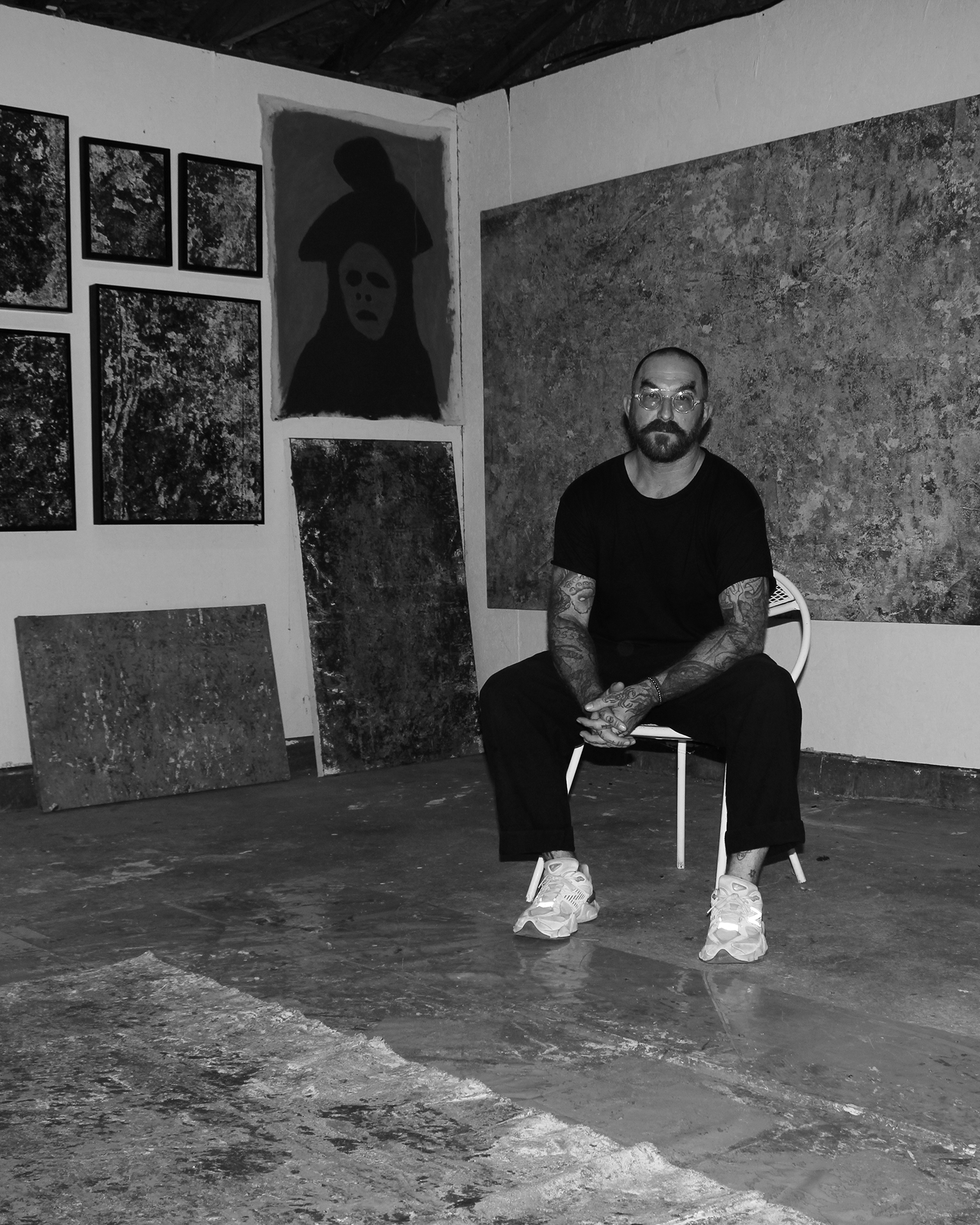
b. 1984, Amory, MSLives and works in Nashville, TNRoy Sedrick Foster III’s work investigates the relationship between presence, perception, and the quiet tensions of inner life.Rooted in a meditative, intuitive approach to painting, his practice centers on texture, repetition, and the interplay between intention and surrender. Each work is less a depiction than a trace – of movement, stillness, and the slow emergence of form.Foster engages the canvas as a contemplative field, where the act of painting becomes a kind of listening. Influenced by spiritual philosophy and personal ritual, his process resists predetermined outcomes, favoring instead a responsive, layered unfolding.Surfaces are built up and broken down, bearing the marks of time and attention. Texture becomes language – at once intentionally unintentional, accidental yet precise – holding the tension between control and release.His paintings often hover between abstraction and landscape, evoking natural forms, eroded structures, or internal terrains. Guided by an intuitive numbering system, each work carries a quiet symbolism, offering viewers a way in without insisting on a fixed meaning. The absence of titles reinforces this openness – a gesture toward impermanence and the viewer’s own interpretive role.Foster’s evolving body of work invites pause. It asks not for understanding, but for presence – a willingness to sit with ambiguity, to feel before naming, and to experience painting not as image, but as a mirror of sensation, rhythm, and becoming.